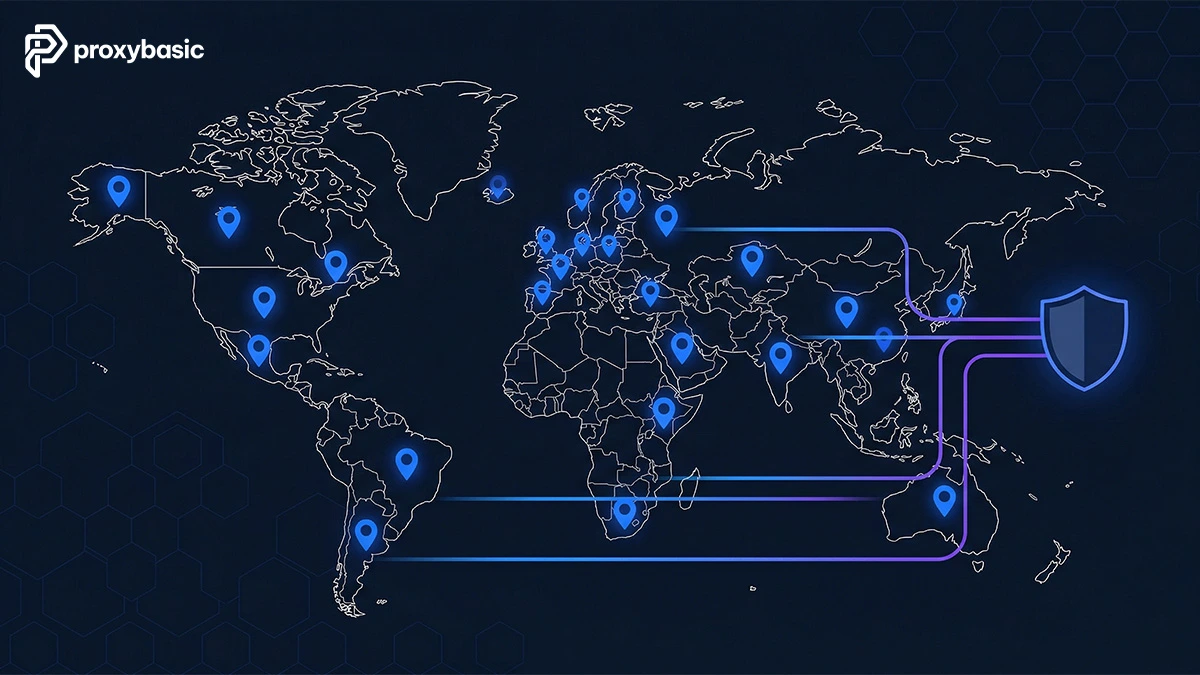
Finding the right best web scraping proxy tools separates a pipeline that runs for weeks from one that hits IP bans after a few hundred requests. Without a reliable proxy setup, websites detect automated patterns fast and respond with CAPTCHAs or hard blocks. In 2026, Bright Data, Oxylabs, and SOAX lead the market, alongside specialized options like Webshare and IPRoyal. These tools route traffic through residential, ISP, and mobile IPs, a strategy used by 39.1% of developers to maintain uptime on active scraping projects.
Whether you run an enterprise team that needs high-uptime SLAs or a solo project with a tight per-GB budget, the right choice depends on five factors: IP pool size, rotation speed, success rate, pricing, and geo-targeting precision. This guide ranks the top 13 options across Python, JavaScript, and Node.js workflows to help you pick the right infrastructure for your 2026 scraping projects.
Web Scraping Proxies: How They Work and Why You Need One
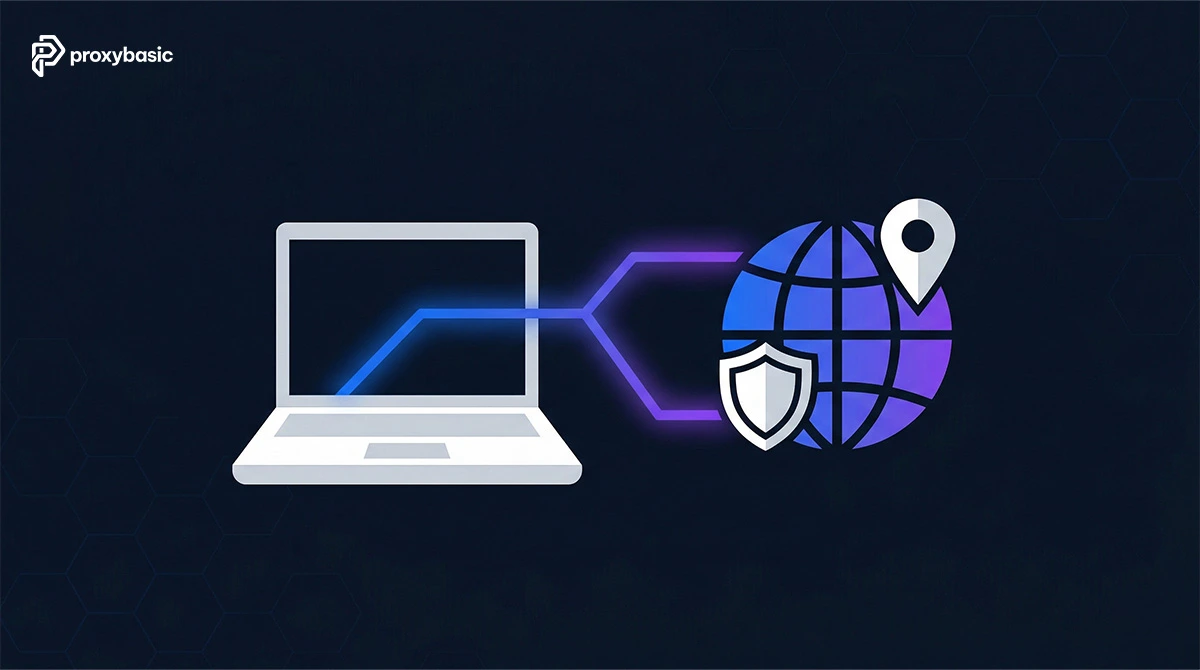
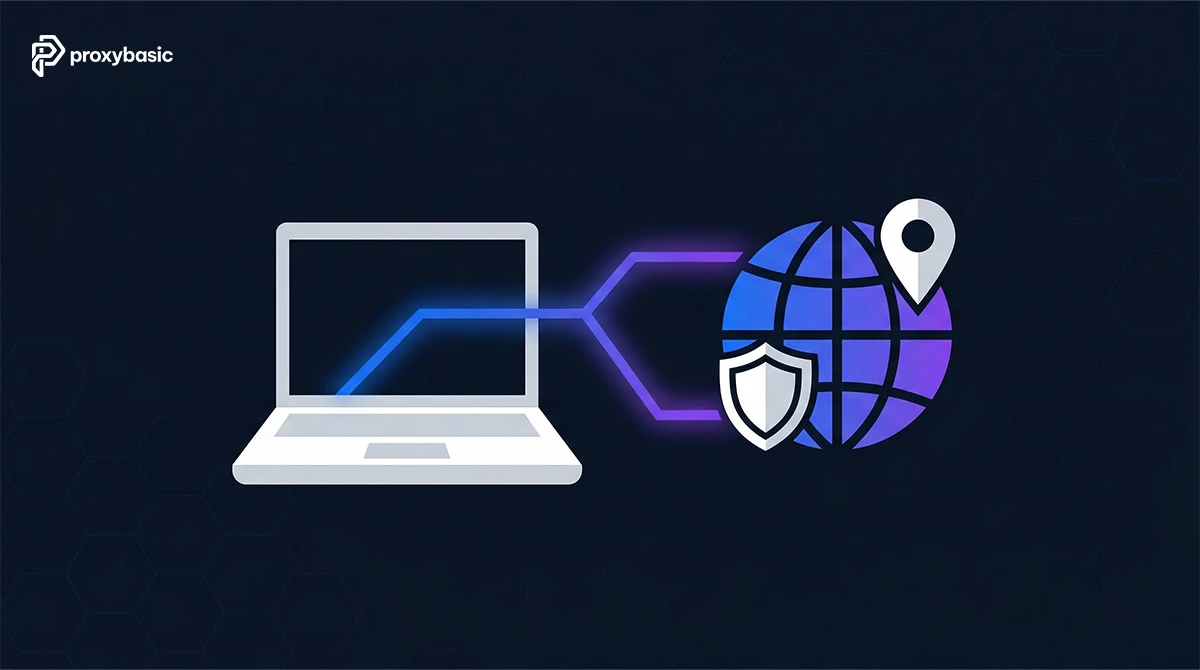
A web scraping proxy is an intermediary server that routes your scraper’s requests through a different IP address, making the target website see that IP instead of your own, which prevents detection and blocking.
To understand why this matters for any scraping project, it helps to look at the two most common problems these tools solve directly.
How Proxies Help You Avoid IP Bans and CAPTCHAs
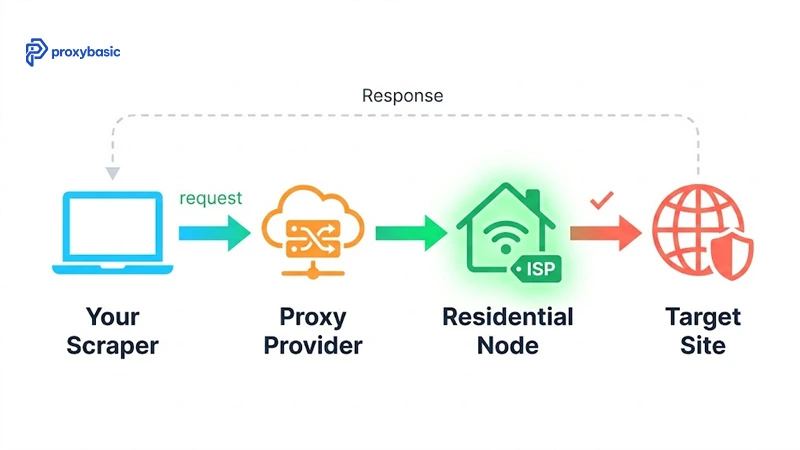
Yes, proxies help you avoid IP bans and CAPTCHAs for three main reasons: they distribute requests across multiple IPs, they make traffic appear human-like, and they allow you to rotate identities so no single IP bears too much load.
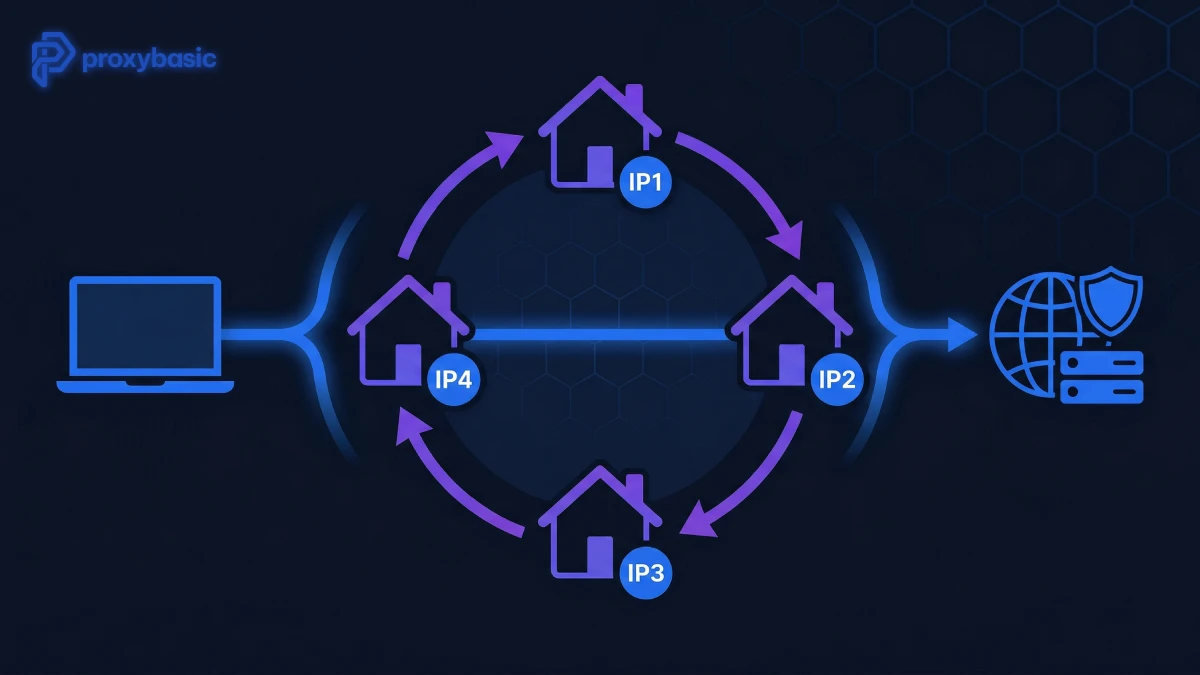
When a scraper sends hundreds of requests from one IP address, the target website flags that IP as suspicious and blocks it. A proxy pool spreads those requests across dozens or thousands of different IPs, keeping each one well below the detection threshold. Residential proxies go further by using IPs tied to real home internet connections, which websites treat as genuine user traffic rather than automated bots.
According to Proxyway’s 2024 developer survey, 39.1% of developers building scraping tools report using proxy services specifically to avoid blocks and maintain operational uptime across their pipelines.
Proxy Types Used in Web Scraping Tools
There are 4 main proxy types used across best tools for web scraping: Residential, Datacenter, ISP, and Mobile, each differing by origin, detection risk, speed, and cost.
The table below covers the key proxy types for web scraping proxy selection. Reviewing this comparison helps you match the right proxy type to your target website and budget before spending on a tool.
| Proxy Type | Scale | Speed | Detection Risk | Cost |
| Residential | Medium-High | Medium | Low | $$ |
| Datacenter | High | High | Medium-High | $ |
| ISP | High | High | Low | $$ |
| Mobile | Medium | Medium | Very Low | $$$ |
Residential proxies use IPs assigned by ISPs to real homes, making them the hardest to detect. Datacenter proxies come from cloud servers, offering speed and low cost but higher block rates on protected sites. ISP proxies combine the speed of datacenter with the legitimacy of residential IPs. Mobile proxies route through cellular networks and are nearly impossible to block, but carry the highest price per GB.
Top 13 Web Scraping Proxy Tools: Full Breakdown
There are 13 best web scraping proxy tools in 2026, ranked by IP pool size, proxy types, pricing, and best fit use case.
The table below summarizes all options at a glance. Use it as a quick reference before reading the full breakdown of each tool below.
| Tool | IPs Available | Proxy Types | Starting Price | Best For |
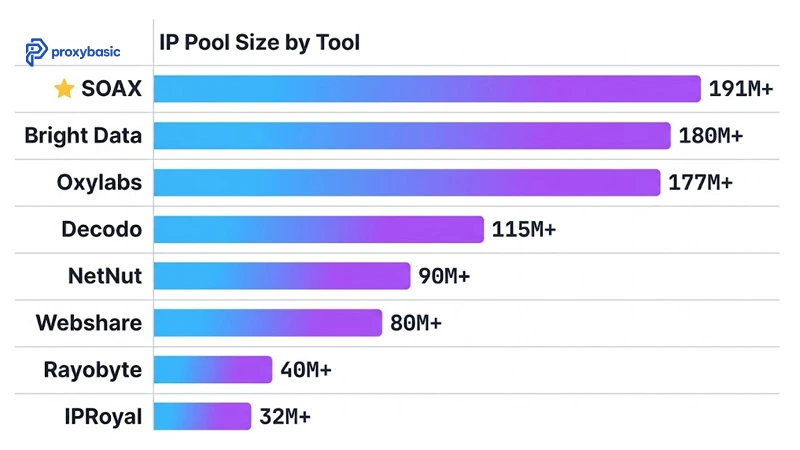
| Bright Data | 180M+ | Residential, DC, ISP, Mobile | $4/GB | Enterprise |
| Oxylabs | 177M+ | Residential, DC, ISP, Mobile | $4/GB | High-volume |
| Decodo | 115M+ | Residential, DC, ISP, Mobile | $6/mo for 2GB | Mid-market |
| Webshare | 80M+ | Residential, DC, ISP | $2.99/mo | Budget developers |
| NetNut | 90M+ | Residential, DC, ISP, Mobile | $3.53/GB | ISP performance |
| SOAX | 191M+ | Residential, DC, ISP, Mobile | $3.60/GB | Accuracy-first |
| IPRoyal | 32M+ | Residential, DC, ISP, Mobile | $1.75/GB | Lowest cost |
| MarsProxies | 1M+ | Residential, DC, ISP, Sneaker, Mobile | $3.49/GB | Specialized |
| Rayobyte | 40M+ | Residential, DC, ISP, Mobile | $3.50/GB | Transparency |
| Nimble Way | Undisclosed | Residential, DC, ISP, Mobile | $8/GB | Low overhead |
| Apify | Built-in | Platform + proxies | Pay per use | No-code + dev |
| Octoparse | Built-in | Visual scraper | Freemium | No-code |
| Webscraper.io | Built-in | Extension + cloud | Freemium | Browser extension |
Note on Pool Sizes: IP pool sizes are based on provider-reported data for 2026 and represent total cumulative networks. Because residential pools are dynamic and fluctuate based on real-time peer availability, these numbers should be viewed as scale indicators rather than fixed daily counts.
Bright Data: Best for Enterprise Web Scraping
Bright Data is the strongest web scraping proxy tool for enterprise use, with 180M+ combined IPs, a 99.95% claimed success rate on residential proxies, and a full suite of scraping tools including a JavaScript-rendering Scraping Browser.
Key highlights:
- IP pool: 180M+ residential, datacenter, ISP, and mobile IPs
- Pricing: Starts at $4/GB, pay-as-you-go with no commitment required
- Success rate: 99.95% on residential proxies
- Response time: Average 0.7 seconds for residential proxies
- Uptime SLA: 99.99% with 24/7 support
- Compliance: ISO 27001 certified, GDPR compliant, ethically sourced network
- Standout tools: Scraping Browser for JS rendering, Crawl API, Scraper Studio (no-code AI scraper)
Bright Data suits enterprises, data teams, and agencies scraping complex or highly protected websites where reliability and compliance are non-negotiable.
Oxylabs: Best for High-Volume Data Collection
Oxylabs is the second-largest web scraping proxy tool with 177M+ IPs across all major proxy types, offering a Web Scraper API that handles proxies, session management, and rotating user agents automatically.
Key highlights:
- IP pool: 177M+ residential, datacenter, ISP, and mobile IPs
- Pricing: Starts at $4/GB
- Web Scraper API: Handles scraping challenges including proxies and sessions out of the box
- Use case strength: E-commerce marketplaces, search engines, and public data collection at scale
Oxylabs is the go-to option for teams that want a managed scraping API rather than building their own proxy management layer from scratch.
Decodo: Best Mid-Market Option
Decodo offers 115M+ IPs across residential, datacenter, ISP, and mobile types at a low entry price of $6/mo for 2GB, making it a strong mid-market option for growing scraping projects.
Key highlights:
- IP pool: 115M+ IPs
- Pricing: $6/mo for 2GB
- Proxy types: Residential, datacenter, ISP, mobile
- Best fit: Teams scaling from small projects to production-level scraping
Webshare: Best Budget Tool for Developers
Webshare provides 80M+ IPs starting at $2.99/mo for 100 proxies, making it one of the most affordable entry points for developers who need reliable residential and datacenter proxies without a large upfront commitment.
Key highlights:
- IP pool: 80M+ IPs
- Pricing: $2.99/mo for 100 proxies
- Proxy types: Residential, datacenter, ISP
- Best fit: Solo developers, small teams, and projects with limited budgets
NetNut: Best for ISP Proxy Performance
NetNut runs a 90M+ IP network with a strong ISP proxy offering, delivering high-speed performance that sits between datacenter speed and residential legitimacy.
Key highlights:
- IP pool: 90M+ IPs
- Pricing: $3.53/GB
- Proxy types: Residential, datacenter, ISP, mobile
- Strength: ISP proxies with low detection risk and datacenter-level speed
SOAX: Best for Accuracy-First Scraping
SOAX has one of the largest IP pools among the 13 tools at 191M+ IPs, with pricing at $3.60/GB across residential, datacenter, ISP, and mobile types, making it the top pick when data accuracy and pool depth matter most.
Key highlights:
- IP pool: 191M+ IPs (largest in this list)
- Pricing: $3.60/GB
- Proxy types: Residential, datacenter, ISP, mobile
- Best fit: High-accuracy data collection requiring diverse IP sources
IPRoyal: Most Affordable Option
IPRoyal offers the lowest per-GB pricing at $1.75/GB across a 32M+ IP pool, covering residential, datacenter, ISP, and mobile types, making it the best cost-per-value option for budget-focused scraping projects.
Key highlights:
- IP pool: 32M+ IPs
- Pricing: $1.75/GB (lowest in this list)
- Proxy types: Residential, datacenter, ISP, mobile
- Best fit: Cost-sensitive projects, personal use, and small-scale data collection
MarsProxies: Best for Specialized Scraping
MarsProxies stands out with its Sneaker proxy support, a rare proxy type not found in most other tools on this list, alongside residential, datacenter, ISP, and mobile options at $3.49/GB.
Key highlights:
- IP pool: 1M+ IPs
- Pricing: $3.49/GB
- Proxy types: Residential, datacenter, ISP, Sneaker, mobile
- Standout feature: Sneaker proxies for limited-release product scraping and purchase automation
Rayobyte: Best for Transparent Pricing
Rayobyte provides 40M+ IPs at $3.50/GB with a strong focus on pricing transparency and compliance, making it a reliable choice for teams that want straightforward billing without hidden fees.
Key highlights:
- IP pool: 40M+ IPs
- Pricing: $3.50/GB
- Proxy types: Residential, datacenter, ISP, mobile
- Best fit: Teams prioritizing clear pricing and billing predictability
Nimble Way: Best for Reduced Operational Overhead
Nimble Way uses AI-assisted scraping to reduce the operational overhead of managing proxies manually, with pricing at $8/GB across residential, datacenter, ISP, and mobile networks.
Key highlights:
- IP pool: Undisclosed
- Pricing: $8/GB (highest in this list)
- Proxy types: Residential, datacenter, ISP, mobile
- Best fit: Teams that want automated proxy management with minimal engineering overhead
Apify: Best Ready-Made Scraping Platform
Apify is a full scraping platform with proxies built in, offering both no-code and developer-friendly Actor workflows that handle proxy rotation, session management, and data storage without separate proxy procurement.
Key highlights:
- Proxies: Built into the platform, no separate procurement needed
- Pricing: Pay per use based on compute and proxy consumption
- Standout feature: Actor marketplace with pre-built scrapers for common targets
- Best fit: Developers and non-technical teams who want a complete scraping solution out of the box
Octoparse: Best No-Code Scraper with Proxy Integration
Octoparse provides a visual point-and-click scraping interface with proxy rotation built in, making it the top choice for non-technical users who need structured data extraction without writing code.
Key highlights:
- Proxies: Built into the cloud scraping plan
- Pricing: Freemium with paid cloud tiers
- Interface: Visual scraper with no coding required
- Best fit: Business analysts, marketers, and researchers who need data without technical setup
Webscraper.io: Best Browser Extension Scraper
Webscraper.io works as a Chrome extension with a cloud scraping option, allowing users to build scrapers directly in the browser and run them with proxy support at scale through the cloud plan.
Key highlights:
- Proxies: Supported via cloud scraping plan
- Pricing: Freemium with paid cloud tiers
- Interface: Chrome extension plus cloud scheduler
- Best fit: Users who prefer browser-based scraping and simple cloud scheduling
How to Choose the Best Web Scraping Proxy Tool
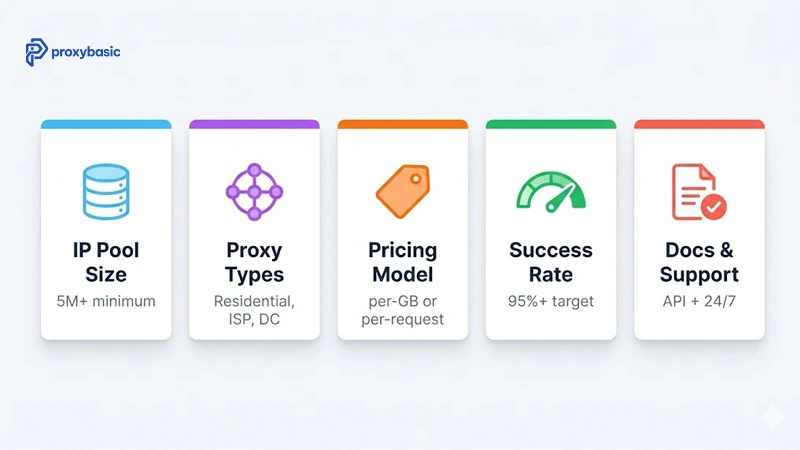
Choosing the best scraping tool with proxy support requires evaluating 5 criteria: IP pool size, proxy types offered, pricing model, success rate, and quality of documentation and support.
Getting this decision right upfront saves time and cost, especially as scraping projects scale. Here is what to look at for each criterion.
Features That Matter Most in a Web Scraping Proxy Tool
The features that matter most are IP pool size, rotation speed, uptime SLA, ethical sourcing, and the quality of API documentation.
IP pool size determines how many unique IPs you can rotate through. A larger pool means lower risk of any single IP getting flagged. Tools like SOAX (191M+ IPs) and Bright Data (180M+ IPs) give you headroom for high-volume scraping.
Uptime SLA tells you how reliable the service is for automated pipelines. Bright Data offers a 99.99% uptime SLA, which matters for production scraping jobs that run on schedules.
Ethical sourcing is worth checking, particularly for enterprise use. Tools with ISO 27001 certification and GDPR compliance, such as Bright Data, reduce legal exposure when collecting public data at scale.
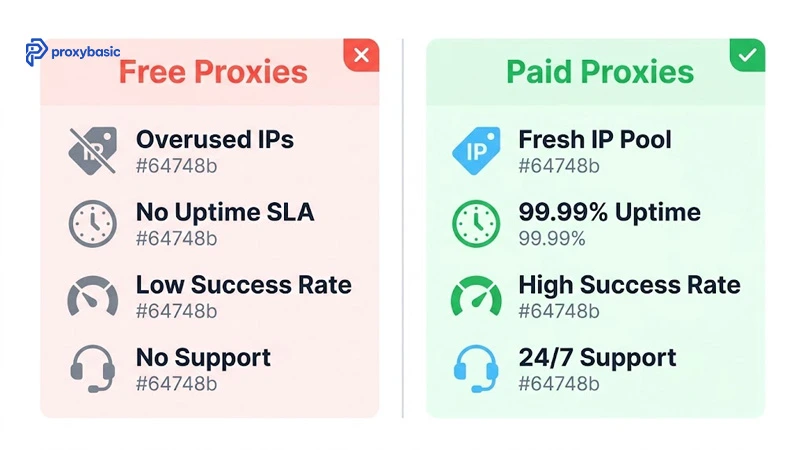
Free proxy tiers exist at some tools for testing purposes, but free proxies carry real risks: overused IPs, no uptime guarantees, and low success rates. Paid plans from reputable tools consistently deliver better performance for any serious scraping project.
Best Web Scraping Tool by Team Size and Budget
Bright Data and Oxylabs win for enterprise scraping, Decodo and Webshare are strong for mid-market teams, and IPRoyal offers the lowest entry cost for small-scale or budget-conscious developers.
Enterprise teams need high IP pool volumes, advanced APIs, compliance documentation, and 24/7 support. Bright Data and Oxylabs both provide end-to-end data platforms with Web Scraper APIs, geo-targeted residential pools, and proven reliability on high-friction targets.
Mid-market teams scraping e-commerce sites, search engines, or classified listings get strong value from Decodo (115M+ IPs at $6/mo for 2GB) and Webshare ($2.99/mo for 100 proxies). Both offer flexible pricing without locking you into enterprise contracts.
Solo developers and small projects benefit most from IPRoyal at $1.75/GB, the lowest per-GB cost across all 13 tools reviewed here.
Free Proxies vs Paid Proxies: What the Data Shows
Beyond the ranked list, two factors directly affect long-term scraping success that many buyers overlook when picking a web scraping proxy tool: the real cost of free proxies and the need for JavaScript rendering support.
Free Proxies Are Not Reliable for Production Scraping
No, free proxies are not reliable enough for serious web scraping proxy use for three reasons: they use overused IP ranges, they offer no uptime guarantees, and their success rates on protected websites are too low for production pipelines.
Free proxies are typically shared across hundreds or thousands of users at the same time, meaning the IPs get flagged and blocked faster than paid rotating pools. They also lack geo-targeting options, session management, and support channels that paid tools include as standard.
Some tools like Webshare and Oxylabs offer free tiers specifically for testing, which is the right use case for free proxies. For any scraping project running more than a few hundred requests per day, a paid plan delivers far better return on investment through higher success rates and lower data gaps.
JavaScript-Heavy Sites Require Headless Browser Support
Yes, if your targets use JavaScript frameworks to render content, your web scraping proxy tool needs to support headless browser integration or offer a dedicated Scraping Browser.
Standard residential or datacenter proxies route HTTP requests but do not execute JavaScript. Sites built on React, Vue, or Angular load their data after the initial HTML response, meaning a plain request returns an empty page.
Bright Data’s Scraping Browser handles this by combining proxy routing with full JS rendering in a managed headless environment. For tools without this feature, pairing the proxy with Playwright or Puppeteer achieves the same result, but requires additional engineering setup on your end.
FAQ
What’s the difference between residential and datacenter proxies for web scraping?
Residential proxies use IPs from real home internet connections, making them hard to detect but more expensive. Datacenter proxies come from cloud servers, offering faster speeds and lower costs, but carry a higher risk of being blocked on protected sites.
Which web scraping proxy tool is best for developers on a tight budget?
IPRoyal offers the lowest per-GB pricing at $1.75/GB, making it ideal for cost-sensitive projects. Webshare is another strong option at $2.99/month, and both Oxylabs and Webshare offer free tiers suitable for initial testing.
Do I need special proxy support to scrape JavaScript-heavy websites?
Yes. Standard proxies only route HTTP requests and don’t execute JavaScript, so sites built on frameworks like React or Vue will return empty pages. You’ll need either a dedicated Scraping Browser (like Bright Data’s) or a headless browser tool like Playwright or Puppeteer paired with your proxy service.
Conclusion
The 13 best web scraping proxy tools in 2026 cover every use case from enterprise-grade data platforms to no-code browser scrapers. Bright Data and Oxylabs lead for high-volume, compliance-sensitive scraping. IPRoyal and Webshare deliver the strongest cost-per-value for smaller budgets. Apify, Octoparse, and Webscraper.io remove the need for separate proxy procurement entirely by bundling everything into one platform.
For deeper comparisons of residential proxy networks, rotating proxy services, and the best tools for web scraping by language (Python, Node.js, JavaScript), visit ProxyBasic for updated guides and reviews across every scraping use case.