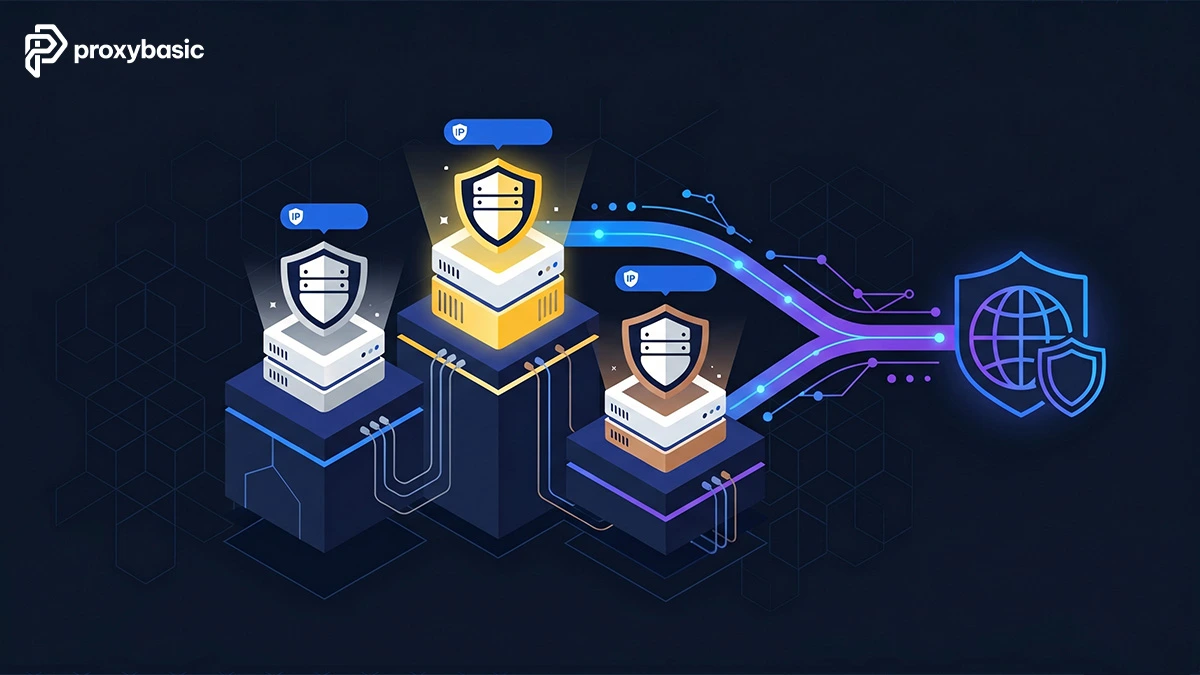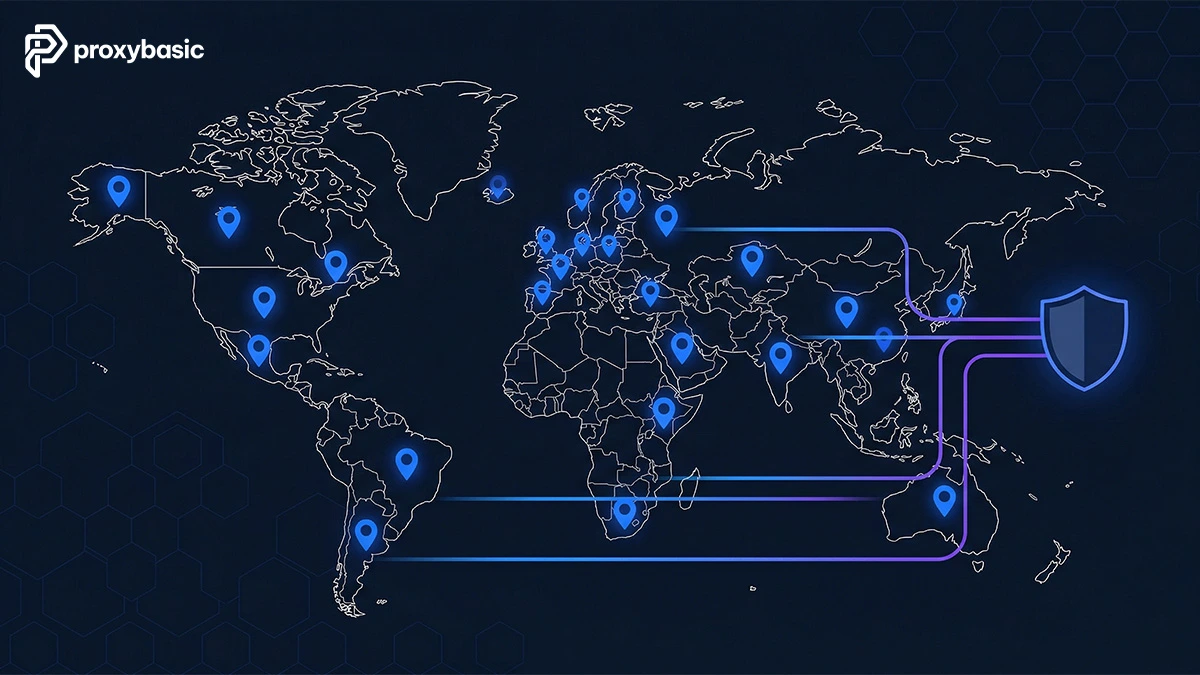
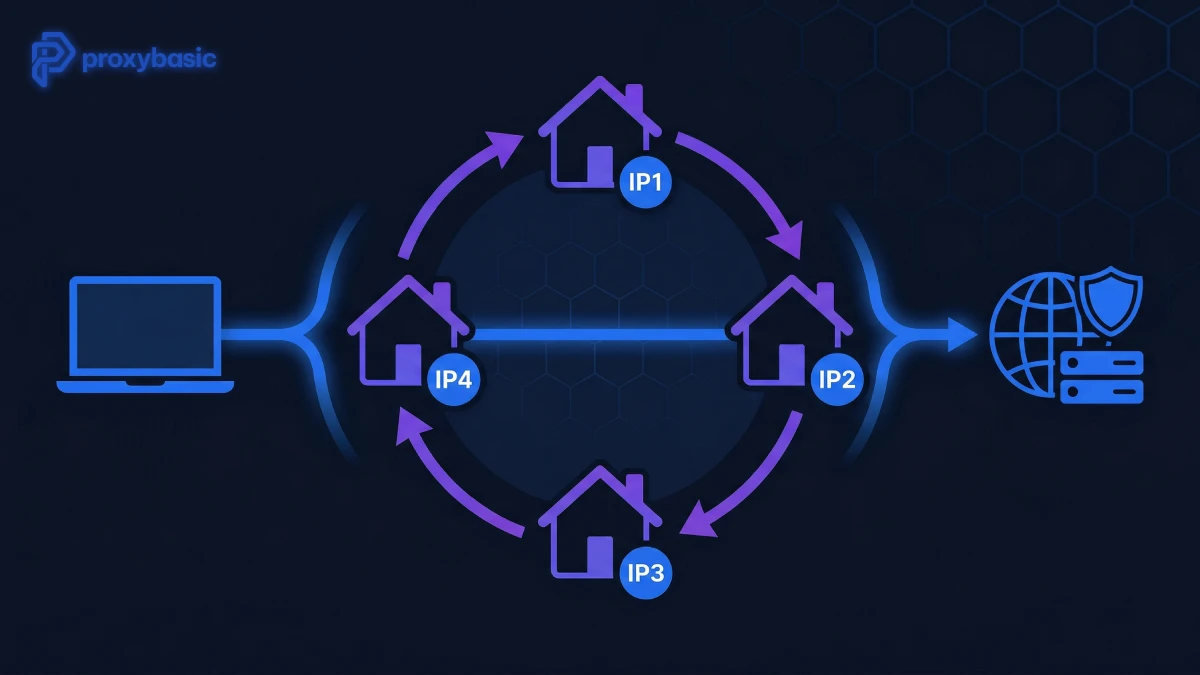
The 17 best rotating residential proxies in 2026 are Bright Data, Decodo, 9Proxy, Oxylabs, Webshare, NetNut, IPRoyal, Nimble, Rayobyte, MarsProxies, SOAX, ScraperAPI, Massive, Geosurf, Intoli, Zyte, and Thordata. Pricing ranges from $0.65/GB (Thordata, Massive) to $200/GB (Intoli), so the right pick depends on your monthly data volume, rotation control needs, and how well-protected your target sites are. For teams looking to buy rotating residential proxy access fast, Decodo and Webshare both offer self-serve signup with no sales call required.
Getting this decision wrong costs more than money. Send datacenter IPs at a Cloudflare-protected target and you burn bandwidth on blocked requests. Pick a cheap rotating residential proxy with a small pool and you hit IP reuse patterns within hours. The six criteria that matter are pool size, rotation control, geo-targeting depth, pricing model, dashboard quality, and trial availability. If you want to test before committing, several providers on this list offer a rotating residential proxy free trial with no credit card required.
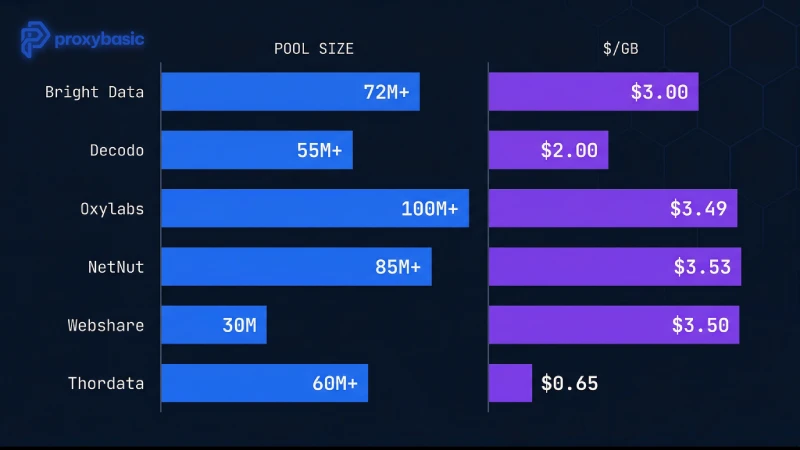
How Do the 17 Best Rotating Residential Proxy Providers Compare?
The table below compares all 17 rotating residential proxy providers across pool size, price per GB, free trial availability, and best use case. Read this before the provider breakdowns to shortlist 2 to 3 options that match your budget and task.
| Provider | Pool Size | Price/GB | Free Trial | Best For |
|---|---|---|---|---|
| Bright Data | 72M+ | $3.00 | 7 days + $500 match | Enterprise, petabyte-scale |
| Decodo | 55M+ | $2.00 | 3 days | Budget residential, scale |
| 9Proxy | 20M+ | $0.68 | Available | Affordable ISP, Enterprise |
| Oxylabs | 100M+ | $3.49–$8 | 7 days | Large-scale, eCommerce |
| Webshare | 30M | $3.50 | 10 proxies free | Developers, small projects |
| NetNut | 85M+ | $3.53 | 7 days | AI/BI pipelines, zero blocks |
| IPRoyal | Not disclosed | $7.00–$7.35 | None | Flexible rotation intervals |
| Nimble | Not disclosed | $7.50–$8.00 | 7 days | Integrated scraping APIs |
| Rayobyte | 300K+ | $1/IP/month | Available | Budget, US proxies |
| MarsProxies | Not disclosed | $4.99 | Available | Gaming, sneakers |
| SOAX | Not disclosed | $4.00 | Available | LLM data, AI pipelines |
| ScraperAPI | Aggregated | Per request | 5,000 free credits | Managed scraping, no setup |
| Massive | 60M+ | From $0.65 | Available | Residential automation |
| Geosurf | 130+ countries | $450/month | Available | Premium US/intl residential |
| Intoli | Not disclosed | $200/GB | Free consultation | High-success managed service |
| Zyte (Crawlera) | Not disclosed | $29–$999/month | Available | Scrapy users, JS rendering |
| Thordata | 60M+ | $0.65 | Available | Budget, high-speed |
Bright Data
Bright Data has over 72 million rotating residential IPs across every country and city worldwide, with two rotation modes: session-based IP rotation and constant rotation through a dedicated proxy endpoint.
Key specs:
- Geo-targeting: city, state, ZIP code, ASN
- Price: from $3.00/GB residential, $4.20/GB mobile
- Rotating residential proxy free trial: 7 days + up to $500 deposit match for new users
- Proxy manager: open-source, configurable rotation intervals and request limits
Bright Data targets enterprise users who need petabyte-scale data collection. For smaller projects, Decodo or Webshare deliver better value per dollar.
Decodo (formerly Smartproxy)
Decodo offers 55M+ rotating residential IPs and the lowest per-GB pricing among major providers at $2.00/GB on volume plans. For teams looking to buy rotating residential proxy access without enterprise overhead, Decodo’s self-serve signup and developer API make it the fastest path to a working setup.
Key specs:
- Sticky sessions: up to 30 minutes
- Geo-targeting: city and ZIP code for residential
- Uptime SLA: 99.99%
- Discount code for 50% off: RESI50
- PAYG rate: $3.50/GB after plan limits
Decodo works well for teams running parallel scrapers. The unlimited connections policy means no per-thread fees regardless of how many concurrent requests you run.
9Proxy
9Proxy provides rotating residential proxies and mobile proxies with coverage across major countries and ISP networks. The platform focuses on affordable self-serve proxy access for scraping, multi-account management, SEO automation, and geo-targeted browsing.
Key specs:
- Proxy types: residential proxies, rotating residential proxies, mobile proxies
- Protocols: HTTP(S), SOCKS5
- Geo-targeting: country, city, and ISP-level targeting
- Authentication: username/password and IP whitelist
- Rotation: per-request rotation and sticky session support
- Dashboard: self-serve proxy management with local forwarding app support
- Pricing: budget-friendly compared to enterprise-focused providers
- Best for: account management, anti-detect browsers, scraping, automation
9Proxy works well for teams that need low-cost residential or ISP proxies without enterprise onboarding. Unlike providers focused purely on API-driven scraping infrastructure, 9Proxy also targets users running browser automation stacks through tools like Puppeteer, Playwright, AdsPower, Multilogin, and GoLogin.
Oxylabs
Oxylabs has the largest pool at 100M+ IPs across residential and mobile. Residential proxies rotate with each new request by default. For dedicated datacenter proxies without built-in rotation, port 8000 enables random IP selection from your list.
Key specs:
- Mobile proxy rotation: per request by default, or sticky up to 30 minutes
- Geo-targeting: country, city, state, ZIP, ASN
- Price: $3.49/GB residential, $8.00/GB mobile
- Rotating residential proxy free trial: 7 days
Oxylabs fits e-commerce scraping, cybersecurity, and travel aggregation at scale. The onboarding requires a form submission rather than instant access, which can delay setup by a day.
Webshare
Webshare offers 30M residential IPs and a rotating residential proxy unlimited bandwidth option on its ISP proxy plan. The rotating endpoint automatically cycles IPs without any extra configuration.
Key specs:
- Free plan: 10 datacenter proxies + 1GB/month
- ISP proxies: 100,000 static residential IPs, rotating residential proxy unlimited bandwidth
- Price: $3.50/GB residential
- Rotating endpoint: one URL, works with all proxy types
Webshare suits developers and smaller teams. The free tier is the best starting point for testing proxy integration before committing to a paid plan.
NetNut
NetNut sources its residential rotating proxies directly from ISPs rather than a peer-to-peer network. This gives faster one-hop connectivity and avoids reliability issues common in P2P pools.
Key specs:
- Pool: 85M+ IPs across 195 countries
- Rotation: per session by default, custom intervals available
- AI-powered fingerprinting and auto-retry on the unblocker tool
- Geo-targeting: city and state level
- Price: from $3.53/GB, minimum plan $99/month
- Rotating residential proxy free trial: 7 days
NetNut is the right pick for data pipelines feeding AI models or BI dashboards, where connection reliability matters more than raw price.
IPRoyal
IPRoyal offers three rotation modes: randomized IPs (change per request), sticky IPs (up to 7 days), and manual rotation via the dashboard dashboard.
Key specs:
- Manual rotation: click “Clear sessions” in dashboard to rotate anytime
- Mobile proxies: manual rotate via “rotate IP” button
- Rotation interval: set any interval up to 24 hours via widget
- Price: $7.00–$7.35/GB
- No free trial
The main limitation is pool size. IPRoyal’s residential pool is smaller than Bright Data, Decodo, or Oxylabs, which can affect success rates on heavily scraped targets.
Nimble
Nimble provides rotating residential proxy access with automatic rotation as the default, plus sticky sessions that rotate after 10 minutes of inactivity.
Key specs:
- Integration: built into Nimble’s web scraping APIs
- Price: $7.50–$8.00/GB
- Rotating residential proxy free trial: 7 days
Nimble suits teams that want proxy management and scraping infrastructure bundled together, rather than managing proxies and scraper logic separately.
Rayobyte
Rayobyte focuses on US-based proxies with unmetered bandwidth at $1 per IP per month. Rotation happens every 10 minutes on a fixed schedule.
Key specs:
- Pool: 300,000+ IPs
- Bandwidth: unmetered, speeds up to 1 Gb/s
- Authentication: whitelist-only (no username/password)
- Price: $1/IP/month
- Free trial: available
Rayobyte works best for price-sensitive projects scraping sites without aggressive anti-bot systems. The whitelist-only authentication means you need a static outbound IP on your end.
MarsProxies
MarsProxies uses an ethical proxy network with no traffic expiration, meaning unused bandwidth rolls over to the next billing period.
Key specs:
- Price: from $4.99/GB
- Use cases: gaming, sneaker copping, web scraping, restricted content access
- Compatibility: works with most automation tools
- Support: 24/7
MarsProxies fits niche use cases like sneaker copping and gaming accounts where IP reputation matters as much as rotation speed.
SOAX
SOAX targets teams building AI and LLM data pipelines, with usage-based pricing and low latency residential rotating proxies.
Key specs:
- Price: from $4.00/GB
- Use cases: LLM training data, cybersecurity, price monitoring, recruitment data
- Features: high success rates, security compliance, usage-based billing
SOAX is a solid pick for AI teams that need large-scale structured web data without managing proxy infrastructure.
ScraperAPI
ScraperAPI is an API wrapper around a managed pool of datacenter, residential, and mobile proxies from multiple providers. You send a request to ScraperAPI’s endpoint and it handles proxy selection, rotation, CAPTCHA solving, and retries.
Key specs:
- Pool: aggregated from dozens of providers, 50+ countries
- Special pools: eCommerce, search engine, social media, sneaker, ticket
- Free tier: 5,000 API credits (no credit card required)
- Smart routing: automatic throttling and subnet rotation
ScraperAPI works best when you want zero proxy management overhead.
Massive
Massive offers residential rotating proxies for automation tasks with a 60M+ IP pool, sub-0.6s response times, and pricing from $0.65/GB.
Key specs:
- Pool: 60M+ IPs
- Response time: sub-0.6s
- Geo-targeting: exact city-level
- Price: from $0.65/GB
- Protocols: HTTP, HTTPS, SOCKS5
- Uptime: 99.99%
Geosurf
Geosurf focuses on premium residential IPs in markets where other providers have gaps, including China and Iran.
Key specs:
- Countries: 130+, including China and Iran
- Special pools: Craigslist proxies, ad verification proxies
- Price: starting at $450/month for 38GB
- Extra data: $12/GB over plan limit
Geosurf is expensive for general use, but it fits teams that specifically need clean residential IPs in markets other providers cannot cover.
Intoli
Intoli operates as a fully managed proxy and scraping service run by a small technical team.
Key specs:
- Price: $200/GB, minimum 5GB/month
- Features: auto-retry, intelligent routing, headless browser and JS rendering
- Support: free consultation included
Intoli is the most expensive option on this list. It fits teams that need near-100% success rates on heavily protected sites and do not want to manage any scraping infrastructure.
Zyte (formerly Crawlera)
Zyte is one of the oldest IP rotation services, built around the Scrapy open-source scraping framework.
Key specs:
- Price: $29/month (50,000 requests) to $999/month enterprise
- Features: smart proxy manager, JavaScript rendering via Splash, custom-built scrapers
- Also includes: Scrapy cloud hosting, scraping consulting
Zyte works best for Python developers already using Scrapy who want integrated proxy management without switching tools.
Thordata
Thordata offers a 60M+ IP pool at one of the lowest price points on this list. For teams that need a cheap rotating residential proxy without sacrificing pool size or speed, Thordata is the strongest option at $0.65/GB.
Key specs:
- Pool: 60M+ IPs
- Price: from $0.65/GB
- Response time: sub-0.6s
- Protocols: HTTP, HTTPS, SOCKS5
- Uptime: 99.99%
- Geo-targeting: exact city level
For budget-focused teams who need solid performance, Thordata delivers at a fraction of what Bright Data or Oxylabs charges.
What Are Rotating Residential Proxies and How Do They Work?
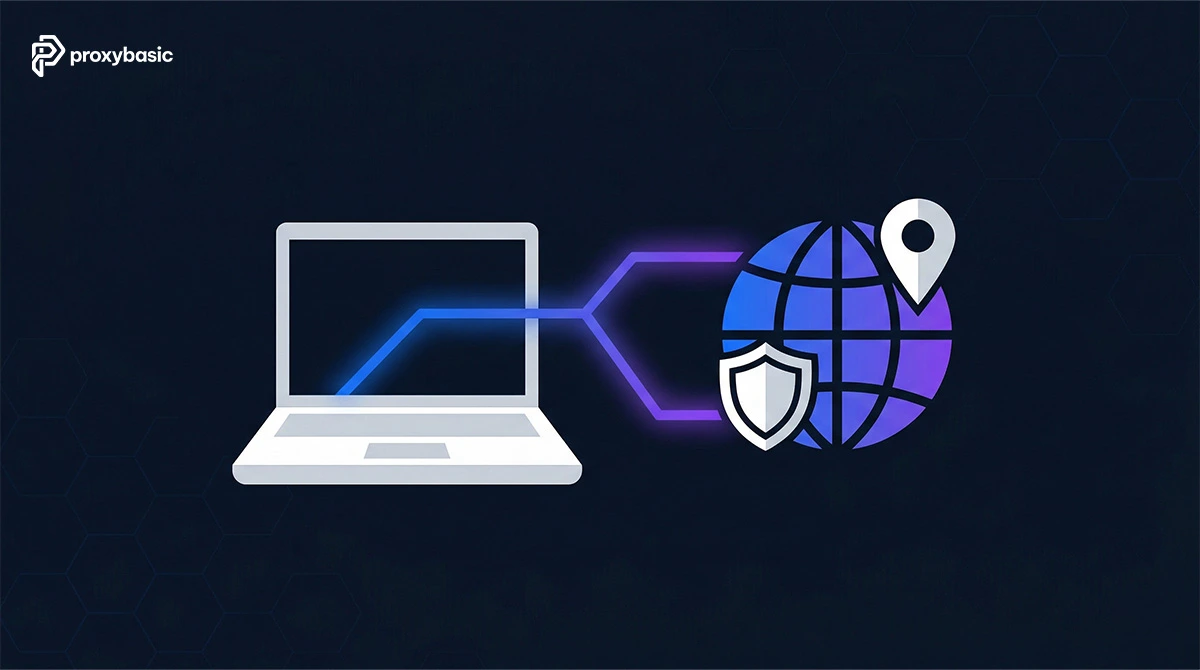
Rotating residential proxies are IP addresses assigned by ISPs to real home devices, used in a pool where the IP changes automatically with each request or on a set schedule.
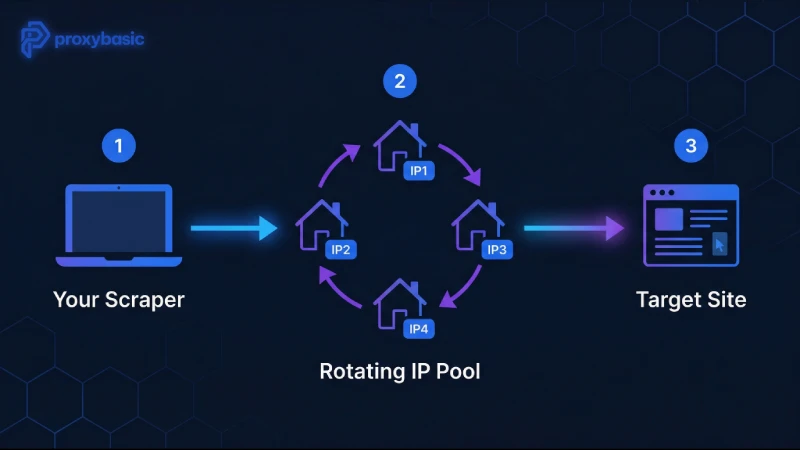
Here is how the process works:
- Your scraper sends a request through the proxy service endpoint.
- The proxy service picks an IP from its residential pool and routes your request through it.
- The target website sees a real home IP address, not a datacenter IP.
- On the next request, the proxy service assigns a different IP from the pool.
- This continues for every request, making each one look like it comes from a different home user.
The key difference from datacenter proxies is trust level. Residential IPs carry ISP-assigned identifiers that websites treat as legitimate home traffic. Datacenter IPs are easier to flag because they come from commercial cloud providers like AWS or Google Cloud, which websites can block in bulk.
What Are the Types of Rotating Residential Proxies?
There are 4 main types of rotating proxies, each suited to different use cases: rotating residential, rotating datacenter, rotating mobile (4G), and ISP proxies.
The table below maps each proxy type to its detection risk, price range, and best use case. Picking the right type before comparing providers saves time and avoids paying for features you do not need.
| Type | IP Source | Detection Risk | Price Range | Best For |
| Rotating Residential | ISP-assigned home IPs | Low | $2–$8/GB | Web scraping, SEO, price monitoring |
| Rotating Datacenter | Cloud/data centers | Medium-High | $0.40–$3.50/GB | High-speed tasks, easy targets |
| Rotating Mobile (4G) | Mobile carriers | Very Low | $5–$15/GB | Social media, mobile-fingerprinted sites |
| ISP Proxy (Static Residential) | ISP-assigned, fixed IP | Low | $2–$6/GB | Account management, sticky sessions |
Rotating residential proxies give you real ISP-assigned IPs that rotate automatically, which is what most web scraping projects need. Datacenter proxies are faster and cheaper but easier to detect. 4G mobile proxies are the hardest to detect but cost more and run slower. ISP proxies sit between residential and datacenter: they use ISP-assigned IPs but stay fixed, which works well for account management tasks.
How to Choose the Best Rotating Residential Proxy Provider
Choosing the right rotating residential proxy provider depends on 6 criteria: IP pool size, rotation control, geo-targeting depth, pricing model, dashboard and API quality, and support.
IP pool size and location diversity
Bigger pools reduce the chance of hitting a blocked or already-used IP. For large-scale scraping, look for providers with 30M+ IPs. Oxylabs (100M+), NetNut (85M+), and Bright Data (72M+) lead here.
Rotation control
Check whether the provider supports:
- Per-request rotation (new IP every request)
- Sticky sessions (same IP for 10 to 30 minutes)
- Time-based rotation (rotate every X minutes)
- Manual rotation via dashboard
If your project requires both rotating and sticky modes, pick a provider that supports both, or use static proxies with a proxy rotator add-on.
Geo-targeting depth
Country-level targeting is standard. City, ZIP code, and ASN-level targeting is available at Bright Data, 9Proxy, Oxylabs, NetNut, and Decodo. Check whether the provider targets at the level your project needs.
Pricing model
Two main structures exist:
- Pay-per-GB (PAYG): Pay only for what you use. Good for variable volume.
- Monthly plan: Fixed bandwidth at a lower per-GB rate. Good for consistent high volume.
At 100GB+/month, Decodo’s $2.00/GB plan saves a lot compared to Bright Data’s $3.00/GB. At under 10GB/month, PAYG avoids wasting a large monthly budget. If you want to buy rotating residential proxy access with the lowest per-GB rate, start with Thordata or Massive at $0.65/GB.
Dashboard and API
A clean dashboard saves setup time. Webshare and Decodo offer self-service portals where you can configure rotation and download proxy lists in minutes. Oxylabs requires a form submission before access.
Support and documentation
For production scraping, response time matters. IPRoyal, MarsProxies, and NetNut advertise 24/7 support. Decodo advertises a 40-second response time on technical support issues.
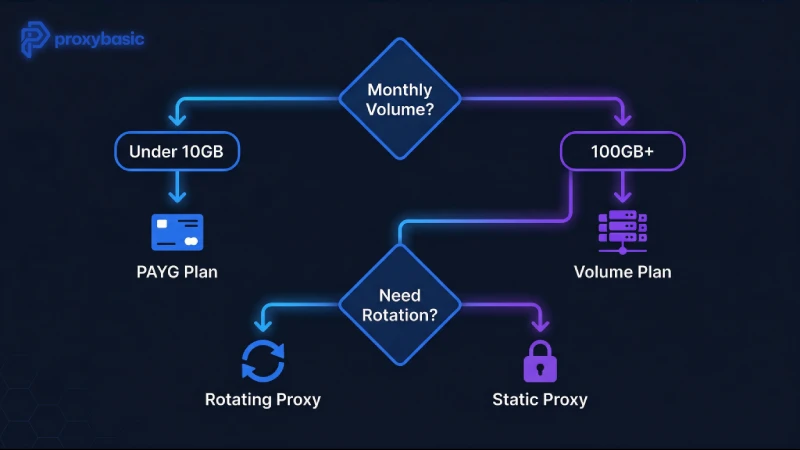
Which Rotating Residential Proxy Is Right for Your Project?
Picking the right rotating residential proxy provider is not about finding the biggest pool or the lowest price. It is about matching the provider’s strengths to your specific project needs.
For most web scraping projects, the shortlist looks like this:
- Best overall: Bright Data (largest pool, most rotation options, enterprise-grade)
- Best value at scale: 9Proxy ($0.68/GB, 20M+ IPs, 99.99% uptime)
- Best for developers starting out: Webshare (free 10 proxies, simple rotating endpoint)
- Best for AI and LLM pipelines: SOAX or NetNut (built for structured data at scale)
- Best managed option: ScraperAPI (zero proxy management, pay per request)
- Best cheap rotating residential proxy: Thordata ($0.65/GB, 60M+ IPs, SOCKS5 support)
- Best rotating residential proxy unlimited bandwidth: Webshare ISP or Oxylabs enterprise
FAQ
Are rotating residential proxies better than datacenter proxies?
Yes for protected websites. Residential proxies are harder to detect, while datacenter proxies are usually faster and cheaper.
Which rotating residential proxy is best for beginners?
Webshare and 9Proxy are good starting points because they offer simple setup, affordable pricing, and self-serve dashboards.
Why do websites block datacenter proxies more often?
Datacenter proxies are easier to detect because their IPs come from cloud providers, while residential proxies use real ISP-assigned home IP addresses.
Conclusion
Choosing the best rotating residential proxy in 2026 comes down to your workload, budget, and target sites. Bright Data and Oxylabs lead for enterprise-scale scraping, while Decodo and 9Proxy offer better value for smaller teams and automation workflows. If you are just getting started, Webshare remains one of the easiest platforms to test with a free plan and simple setup.
Before committing, test a few providers against your real targets. Rotation quality, block rates, and session stability matter more than marketing numbers alone.