
The intersection of residential proxy GDPR compliance, data privacy laws, and web scraping is a high-stakes balancing act for modern data teams. Risk intersects in two ways: first, how your proxy provider handles data about the residential IPs in their network; second, how your organization handles personal data collected through proxy-enabled scraping or monitoring. Getting both wrong creates massive regulatory exposure, while getting both right lets you leverage residential networks for legitimate business purposes safely.
This blog covers what GDPR actually requires in the context of proxy use, which specific practices create non-compliance risks, and how to structure your proxy operations to stay entirely within legal bounds.
How GDPR Applies to Residential Proxy Use
GDPR governs the processing of personal data belonging to EU residents. It applies to any organization that processes such data, regardless of where the organization is based. Using a residential proxy doesn’t automatically trigger GDPR, but several proxy use cases involve personal data processing that does.

The Business Responsibility for GDPR Compliance
When running data collection campaigns, maintaining GDPR compliance is a shared responsibility between the provider and the user. For any residential proxy, legal risks often arise when the processing of personal data is not transparent.
It is vital to understand that any information, such as names, IP addresses, or even browsing habits of EU residents, constitutes personal data. Therefore, establishing a strict residential proxy GDPR strategy helps your organization avoid the heavy fines imposed by European authorities.
Data Residency and Proxy Infrastructure
Data residency refers to where data is stored and processed. GDPR Article 46 restricts transfers of EU personal data to countries outside the EU/EEA unless adequate protections are in place.
If your proxy provider routes traffic through servers or residential IPs located in the EU while processing EU user data, they act as a data processor under your GDPR framework. You need a Data Processing Agreement (DPA) with any proxy provider that touches EU personal data.
Most major residential proxy providers (Bright Data, Decodo, Oxylabs) publish DPAs and GDPR compliance documentation. Check for this before using a provider for EU data collection.
Personal Data Processing Through Proxies
When you use a residential proxy to collect data from websites, the proxy is a transport mechanism. GDPR applies to the data you collect through it , not to the proxy use itself.
Personal data collected through proxies includes:
- Names, email addresses, and contact details scraped from directories or professional profiles
- IP addresses and location data from analytics endpoints
- Behavioral data tied to identifiable individuals
If your scraping collects any of this, GDPR requirements apply: you need a lawful basis, data subject rights processes, and proper retention policies.
Risks of Non-Compliant Proxy Use Under GDPR
Before diving into specific risks, we should understand how proxy use can affect GDPR compliance. Not all proxy activities are illegal, but using them without a proper legal basis or consent can lead to serious penalties and data protection issues.
Impact Assessment of Processing Personal Data
A common mistake is underestimating the risks of using a proxy to collect publicly available information. However, if that data contains individual identifiers, you must adhere to EU principles regarding personal data.
Without a framework for GDPR compliance, using a residential proxy for large-scale scraping can lead to unintentional leaks of sensitive information. A successful residential proxy GDPR operation requires the ability to justify both the purpose and the storage methods of any collected personal data from the very first step.
Breach of Target Website ToS vs. GDPR Risk
A major residential proxy ToS violation occurs when a scraper bypasses a platform’s explicit terms of service, such as scraping data behind an authenticated login page. From a compliance standpoint, violating a target website’s proxy terms of service directly threatens your GDPR strategy.
If you rely on Legitimate Interest (Article 6(1)(f)) as your lawful basis for scraping, regulatory bodies weigh your business utility against user privacy. If your collection method relies on contract breach or deceptive routing, courts are highly likely to rule that your “legitimate interest” is void, turning a ToS violation into an immediate proxy GDPR risk.
Scraping EU Personal Data
Scraping personal data about EU residents without a lawful basis is a GDPR violation. The most common lawful bases for data scraping are:
- Legitimate interest (Article 6(1)(f)), your business interest in the data is balanced against the privacy rights of data subjects
- Contract (Article 6(1)(b)) , processing is necessary to fulfill a contract
- Consent (Article 6(1)(a)) , the data subject has explicitly consented
Most commercial data scraping relies on legitimate interest. This requires a Legitimate Interest Assessment (LIA) that weighs your business need against individual privacy rights. Scraping publicly posted professional information (job titles, company affiliations) often passes this test. Scraping personal contact details for unsolicited marketing typically does not.
The DPA’s fines for unlawful data collection are severe: up to €20 million or 4% of global annual turnover, whichever is higher.
Using Peer Residential IPs Without Consent
Some residential proxy networks source IPs from real device owners who’ve installed software that routes proxy traffic through their connection. This is the “peer residential proxy” model.
GDPR concerns here focus on the device owners, not the proxy users. If proxy providers enroll EU residents’ devices without proper informed consent and clear disclosure about how their connection is used, those providers face GDPR exposure.
For businesses using proxy services, this creates indirect risk: if your provider’s consent practices are non-compliant, your DPA with them may not provide adequate protection. Vet providers for their consent practices before committing to a contract.

How to Use Residential Proxies in a GDPR-Compliant Way
Businesses must choose compliant providers, limit data collection, and maintain proper records to avoid legal risks and ensure transparent data handling. Therefore, we need to understand that using residential proxies under GDPR is not just about tools, but about responsibility.
Choosing GDPR-Compliant Proxy Providers
A GDPR-compliant residential proxy provider will have:
- A published Data Processing Agreement (DPA): Covers how they process data on your behalf
- An EU-US Data Transfer mechanism: Either SCCs (Standard Contractual Clauses) or an adequacy decision for US providers
- Transparent IP sourcing practices: Clear documentation in the provider’s proxy terms of service outlining how residential IPs are obtained, how end-user peers consent, and what opt-out mechanisms exist
- Data retention policies: How long they keep logs of your proxy usage
Bright Data, Oxylabs, and Decodo all publish GDPR compliance documentation. Request their DPA before signing any contract if you’re processing EU data.
Data Minimization in Proxy-Based Collection
GDPR Article 5(1)(c) requires data minimization, collect only what you need for the specific purpose. For proxy-enabled data collection:
- Define the specific data fields you need before building your scraper
- Don’t collect additional fields “in case they’re useful later”
- Strip personal identifiers from datasets when they’re not needed for your use case
- Set clear retention periods: delete collected data when it’s no longer needed
If you’re scraping competitor pricing, you need price and product data, not customer review authors’ names and profile photos.
Documentation and Audit Trails
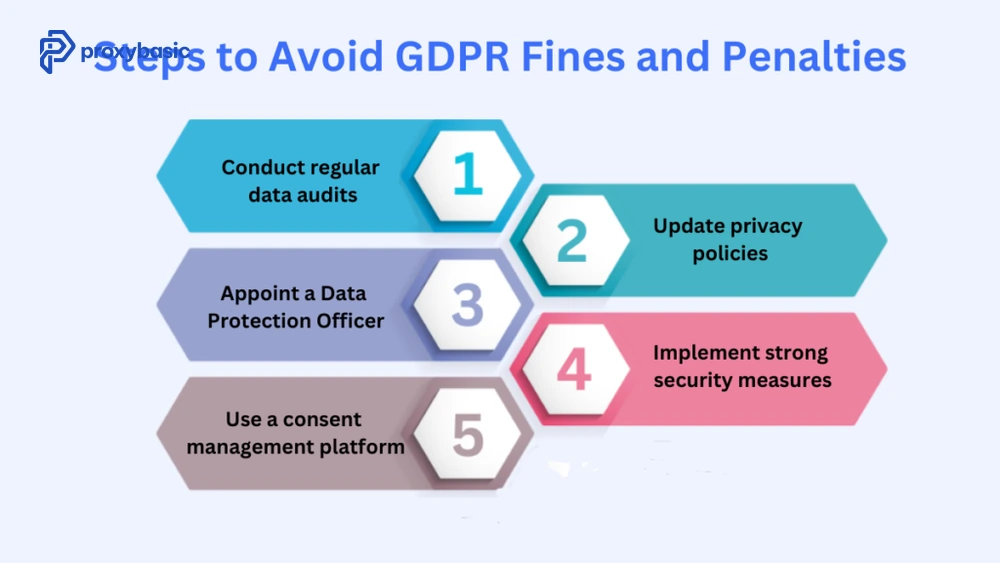
GDPR requires you to document your data processing activities under Article 30 (Records of Processing Activities). For proxy-based data collection, your records should include:
- Purpose of collection: what business objective the data collection serves
- Legal basis: which Article 6 basis you’re relying on, with your LIA if using legitimate interest
- Data categories: what types of data are collected
- Retention period: how long data is kept
- Security measures: how data in transit and at rest is protected
- Third-party processors: your proxy provider, cloud storage providers, etc.
Keep this documentation current. Supervisory authorities can request it during investigations.
GDPR-Compliant Residential Proxy Providers
These providers have published GDPR compliance documentation and offer DPAs:
Bright Data has extensive GDPR compliance documentation, SCCs available, transparent about IP sourcing consent processes. Their legal team publishes public-facing compliance guides.
Oxylabs is GDPR-compliant with published DPA, data residency options for EU-based proxy routing. Their compliance page covers CCPA, GDPR, and other frameworks.
Decodo (ex Smartproxy), GDPR documentation available, DPA provided to enterprise customers. Smaller providers in their network may have varying compliance levels.
NetNut uses ISP-direct IPs rather than peer residential proxies, which removes the device owner consent concern. Simpler GDPR posture for buyers.
For providers not on this list, request their DPA before use. Absence of a DPA or refusal to provide one is a red flag for GDPR compliance.
Conclusion
Residential proxy GDPR compliance is a two-part question: does your provider handle IP sourcing and data processing compliantly, and does your use of the proxy comply with GDPR’s data collection requirements?
On the provider side, require a DPA, verify their IP consent practices, and confirm they support EU data transfer mechanisms. On your side, establish a lawful basis for any personal data you collect, minimize data to what you actually need, document your processing activities, and set retention periods.
Residential proxies are not inherently a GDPR risk. The risk comes from what data you collect through them and whether your provider’s practices meet the standard. Stick to the checklist above and your proxy operations can run cleanly within GDPR requirements.
Visit Proxy Basic for residential proxy plans from GDPR-documented providers with DPAs available on request.