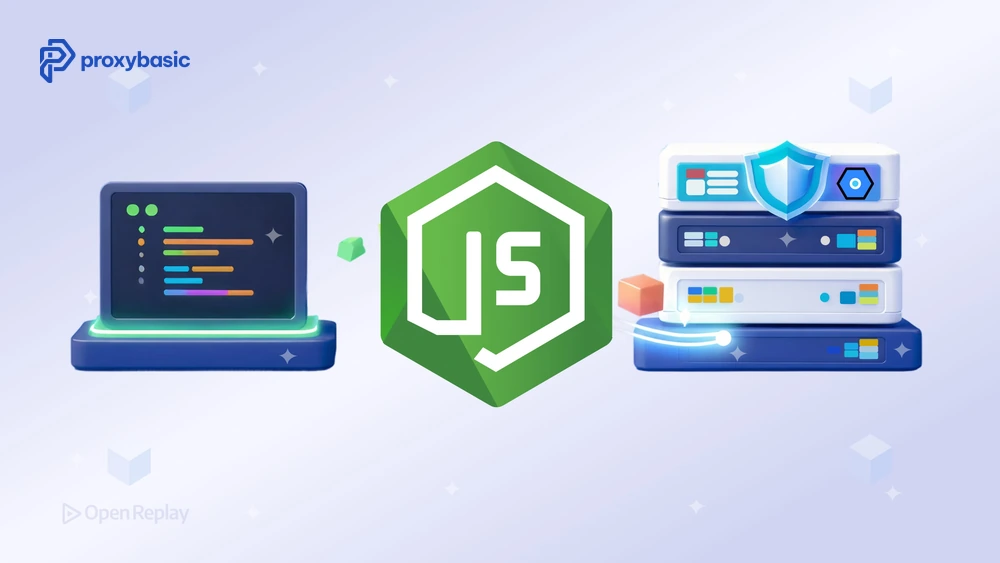
Puppeteer proxy configuration is essential for developers, data collectors, and automation teams that need reliable web access for web scraping and browser automation. This blog will explain how a Puppeteer proxy works, how to route requests through intermediary servers, and how to configure authentication and rotation strategies effectively.
By following these best practices, you can reduce IP-based restrictions, improve scraping stability, access geo-targeted content, and collect public data more efficiently without frequent interruptions.
Understanding How Proxy Integration Works in Puppeteer
A Puppeteer proxy acts as an intermediary between the Chromium browser controlled by Puppeteer and the target website. Instead of connecting directly, requests pass through a proxy server, which masks the original IP address.
This approach is useful for web scraping, SEO monitoring, price tracking, ad verification, and market research. Many websites monitor traffic patterns and block repeated requests from a single IP address. A proxy helps distribute requests and reduce the likelihood of restrictions.
When Puppeteer launches Chromium, it can route all browser traffic through a proxy using the –proxy-server argument. The request flow typically looks like this:
Browser → Proxy Server → Target Website
For authenticated proxies, Puppeteer must also provide credentials before accessing the destination website. If you’re new to proxy configuration, reviewing a general Set Up process can help you understand the basic requirements before integrating a proxy into Puppeteer.
Quick Puppeteer Proxy Setup
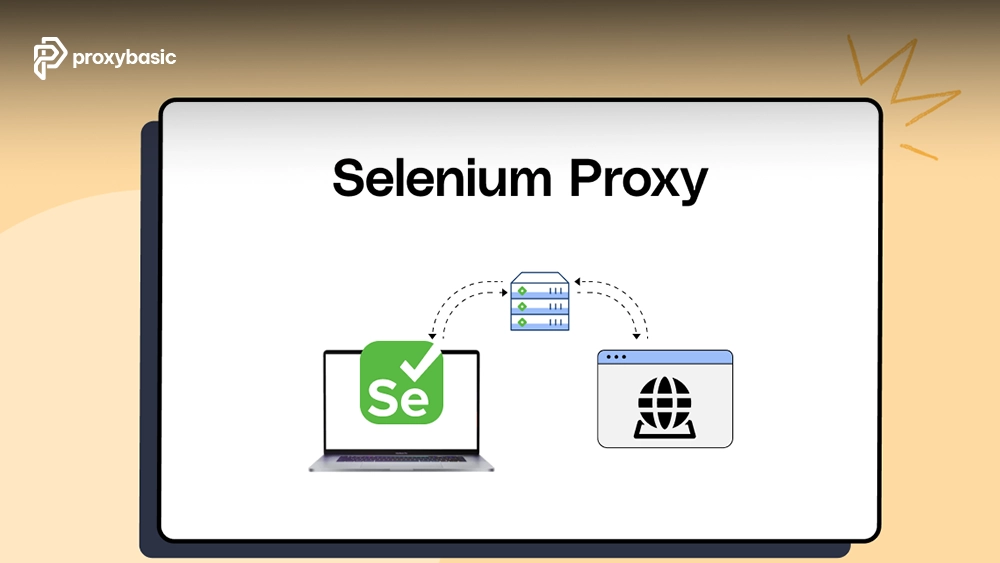
Setting up a Puppeteer proxy is straightforward once you have valid proxy credentials and a working proxy server. Developers familiar with Selenium proxy configurations will notice that Puppeteer uses a similar concept, although implementation details differ between the two automation frameworks.
Prerequisites
Before getting started, make sure you have the necessary tools and credentials in place. Following standard Setup & Integration practices can also help reduce configuration errors during deployment.
- Node.js installed
- Puppeteer installed via npm install puppeteer
- A working proxy server
- Proxy host and port
- Proxy username and password (if authentication is required)
Launch Puppeteer with a Proxy
We can launch Chromium through a proxy by passing the proxy server address using the –proxy-server argument.
const puppeteer = require(‘puppeteer’);
(async () => {
const browser = await puppeteer.launch({
args: [‘–proxy-server=proxy-ip:port’]
});
const page = await browser.newPage();
// Required for authenticated proxies
await page.authenticate({
username: ‘your_username’,
password: ‘your_password’
});
await page.goto(‘https://httpbin.org/ip’);
await browser.close();
})();
Unlike regular proxy URLs, Chromium expects the proxy address without embedding credentials in the –proxy-server argument. If your proxy requires authentication, use page.authenticate() after creating the page.
Verify Your Proxy Is Working
After configuring a Puppeteer proxy, verify that requests are being routed through the proxy server. You can visit one of the following IP-checking services:
- https://httpbin.org/ip
- https://api.ipify.org?format=json
- https://whatismyipaddress.com
If the reported IP address matches your proxy location rather than your local connection, the proxy is working correctly.
Check Your Current IP Address
Before enabling the proxy, record your original IP address for comparison. A quick way to do this is: curl https://httpbin.org/ip
After launching Puppeteer with the proxy enabled, compare the new IP address shown by the verification service. If the IP changes, your browser traffic is successfully passing through the proxy server rather than your local network.
For additional troubleshooting, you can also test the proxy independently before using Puppeteer: curl -x http://proxy-ip:port https://httpbin.org/ip
This helps confirm that the proxy server is reachable and functioning correctly before integrating it into your automation workflow.
Puppeteer Proxy Authentication Explained
Many commercial Puppeteer proxy providers require authentication to prevent unauthorized access and control proxy usage. Without valid credentials, requests typically fail before reaching the target website.
Username and Password Authentication
Most proxy providers supply credentials in a format similar to: username:password@host:port
However, Chromium does not provide a command-line option for proxy authentication. When using a Puppeteer proxy that requires credentials, we must launch the browser with the proxy server and then authenticate separately using Puppeteer’s built-in methods.
Using page.authenticate()
Puppeteer supports proxy authentication through the page.authenticate() method.
const puppeteer = require(‘puppeteer’);
(async () => {
const browser = await puppeteer.launch({
args: [‘–proxy-server=proxy-ip:port’]
});
const page = await browser.newPage();
await page.authenticate({
username: ‘your_username’,
password: ‘your_password’
});
await page.goto(‘https://httpbin.org/ip’);
await browser.close();
})();
In this example, the –proxy-server argument routes browser traffic through the proxy server, while page.authenticate() supplies the username and password when the proxy requests authentication.
For HTTP proxies, Chromium can accept either proxy-ip:port or http://proxy-ip:port. However, many developers prefer the shorter proxy-ip:port format. When using SOCKS proxies, specify the protocol explicitly, such as:
socks5://proxy-ip:port
Securely Storing Proxy Credentials
For production environments, avoid hardcoding proxy credentials directly into your application. Instead, store sensitive information in environment variables.
Example:
process.env.PROXY_USER
process.env.PROXY_PASS
This approach improves security, simplifies credential management, and reduces the risk of accidentally exposing authentication details in source code repositories, logs, or deployment pipelines.
For websites with advanced anti-bot protections, combining proxies with a web unlocker API may further improve access reliability and data collection success rates.
Choosing the Right Proxy Type for Your Puppeteer
Not all proxies offer the same level of performance and reliability. Puppeteer proxy selection affects scraping success, detection resistance, speed, and scalability, so the table below compares the most common proxy types to help you choose the right option.
|
Proxy Type |
Best For |
Advantages |
Limitations |
|
Datacenter Proxy |
Fast scraping |
High speed, low cost |
Easier to detect |
|
Residential Proxy |
Anti-bot websites |
High trust score |
More expensive |
|
ISP Proxy |
Long sessions |
Stable identity |
Higher cost |
|
Mobile Proxy |
Social media automation |
Strong reputation |
Limited availability |
|
Rotating Proxy |
Large-scale scraping |
Automatic IP rotation |
Slightly slower |
The right proxy type depends on the target website’s security level and your scraping objectives. Comparing Top Providers can also help you evaluate factors such as proxy quality, location coverage, pricing, and success rates before selecting a service.
Common Puppeteer Proxy Errors and Troubleshooting Guide
Even a correctly configured Puppeteer proxy may encounter connectivity issues. Understanding common errors can save significant debugging time.
ERR_PROXY_CONNECTION_FAILED
This error occurs when Chromium cannot establish a connection to the Puppeteer proxy server. It is commonly caused by an incorrect proxy address or port, an unavailable proxy server, firewall restrictions, network connectivity issues, or a proxy that uses a self-signed SSL certificate.
How to resolve it:
- Verify the proxy host and port configuration.
- Test the proxy independently using curl or another network tool.
- Confirm that the proxy server is online and accepting connections.
ERR_TUNNEL_CONNECTION_FAILED
This error usually appears when Chromium fails to establish a secure HTTPS tunnel through the proxy. Common causes include proxies that do not support HTTPS traffic, SSL negotiation failures, incorrect proxy configuration, missing CA certificates on Linux systems, firewall restrictions, or IPv6 networking conflicts.
How to resolve it:
- Verify that the proxy supports HTTPS connections.
- Check that CA certificates are installed correctly on the system.
- Test the connection using a different proxy server.
- Disable IPv6 temporarily if it is causing connectivity issues.
DNS Resolution Errors
DNS resolution errors occur when Chromium cannot translate a hostname into an IP address. This can happen because of proxy-side DNS failures, incorrect domain names, temporary network outages, or misconfigured DNS settings.
How to resolve it:
- Verify that the target URL is correct.
- Test another proxy endpoint.
- Check the DNS configuration on the host machine.
- Retry the request after a short delay if the issue is temporary.
SSL Certificate Errors
SSL certificate errors occur when Chromium cannot validate the certificate presented by the website or proxy server. These issues are commonly related to expired certificates, missing certificate authorities, self-signed certificates, or HTTPS incompatibilities between the proxy and the target website.
How to resolve it:
- Update Chromium to the latest version.
- Verify that the proxy supports HTTPS traffic correctly.
- Use trusted proxy providers whenever possible.
Connection Timeout Issues
Connection timeouts occur when requests take longer than the configured timeout threshold. Slow proxy networks, high latency, network congestion, overloaded target websites, or excessive concurrent requests are common reasons for this issue.
How to resolve it:
- Use faster residential, ISP, or datacenter proxies.
- Reduce the number of concurrent requests.
- Implement retry logic for failed requests.
Proxy Refused Connection
This error indicates that the Puppeteer proxy server actively rejected the connection request. The most common causes include expired subscriptions, account restrictions, exceeded connection limits, IP whitelist issues, or authentication failures.
How to resolve it:
- Verify that the proxy subscription is active.
- Check connection and bandwidth limits.
- Review IP whitelist settings.
Final Verdict
A well-configured Puppeteer proxy can improve the reliability, security, and scalability of your automation projects. By validating your proxy setup, handling authentication correctly, and using IP rotation when appropriate, you can reduce connection issues, access location-specific content, and maintain more consistent data collection results.
Following these best practices helps ensure your Puppeteer workflows remain efficient as your projects grow. Visit domain.com to discover more in-depth articles about residential proxies, proxy setup, web scraping, and online privacy.
FAQ – Frequently Asked Questions
Can Puppeteer Use a Different Proxy for Each Page?
Yes. While Chromium normally applies a proxy at the browser level, libraries such as puppeteer-page-proxy allow a Puppeteer proxy per page setup, making it easier to manage multiple accounts, regions, and isolated sessions.
Can I Rotate Proxies Automatically?
Yes. Many proxy providers support automatic IP rotation, allowing each request or session to use a different IP address. A Puppeteer rotating proxy is commonly used for web scraping, product monitoring, and large-scale data collection.
How Many Proxies Do I Need for Scraping?
The number of proxies depends on your scraping volume and target websites. Small projects may only require a few proxies, while larger operations often need dozens or even hundreds of rotating IPs to maintain stability.
Can I Use Free Proxies with Puppeteer?
Yes, but free proxies are generally unreliable and often suffer from slow speeds, connection failures, security risks, and blacklisting. For production environments, paid residential or ISP proxies are usually a more stable and secure option.