Is using a residential proxy legal? Yes, in most countries, including the US, UK, and EU. Proxies are network infrastructure tools, not illegal software. But legality depends on what you do with the proxy, not the proxy itself.
This article covers where the actual legal risk sits, which activities cross the line, and how to use residential proxies without creating legal exposure.
Are Residential Proxies Legal?
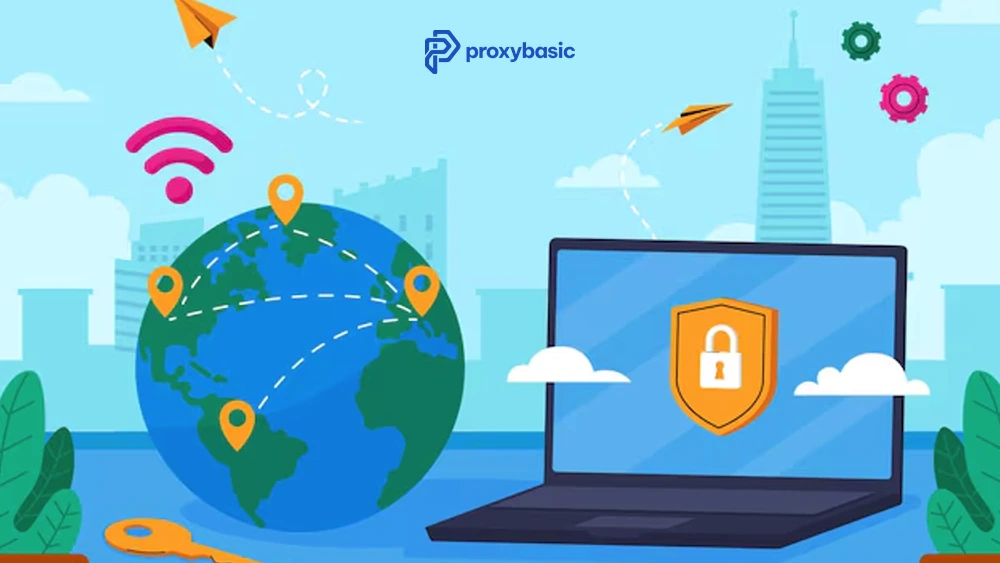
In most jurisdictions, owning and using a residential proxy is legal. A proxy is a server that routes internet traffic, performing the same function as a VPN, a CDN, or a corporate firewall. None of these is inherently illegal.
Residential proxies specifically use IP addresses assigned to real home internet connections. This is how they work, not a loophole or a deceptive practice in itself. The IP is legitimately assigned by an ISP to a device on the proxy provider’s network.
The Legal Status in the US, EU, and UK
United States: No federal law prohibits using proxies. The Computer Fraud and Abuse Act (CFAA) covers unauthorized access to computer systems, but using a proxy to access a publicly available website is not unauthorized access. Legal risk under CFAA arises when you access systems you’re not permitted to access, not from the proxy use itself.
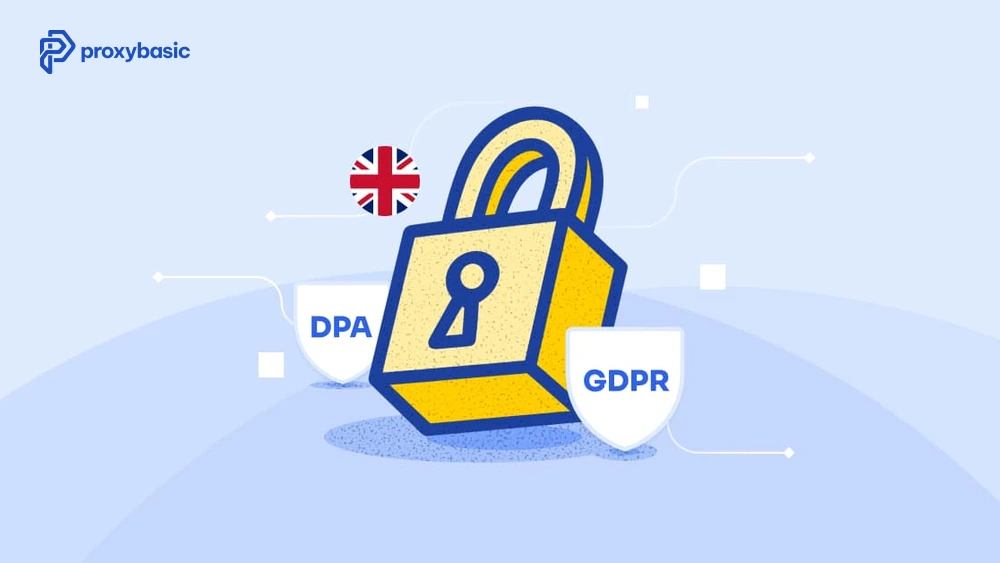
European Union: GDPR and the ePrivacy Directive govern data processing, not proxy use. Using a proxy to browse or collect publicly available data is not illegal under EU law. Data protection requirements apply when you process personal data, a separate question from proxy legality.
United Kingdom: Similar to the EU post-Brexit. The Computer Misuse Act covers unauthorized access, not proxy infrastructure. Using a proxy on a site you’re authorized to access is not an offense.
Proxies Are Infrastructure: The Intent Matters
Courts and regulators consistently look at what was done with the tool, not the tool itself. A hammer can build a house or break a window. A proxy can enable legitimate privacy, research, and data collection, or it can facilitate unauthorized access.
The legal question is never “did you use a proxy?” It’s “Did you access something you were not permitted to access, using any method?”
Where Legal Risk Actually Comes From
Not every violation leads to legal trouble, and using proxies alone is not illegal. The key proxy legal issues lie in how and where data is accessed, especially when authorization is required.
Violating Terms of Service vs Breaking the Law
Most websites prohibit automated access and proxy use in their Terms of Service. Violating a ToS is not the same as breaking the law. ToS violations are civil matters between you and the website operator.
The landmark case hiQ Labs v. LinkedIn (9th Circuit, 2022) established that scraping publicly available data does not violate the CFAA, even if the site’s ToS prohibits it. The court held that publicly accessible data is not “protected” in the CFAA sense.
However, ToS violations can result in:
- Account termination
- IP bans
- Civil lawsuits for breach of contract or tortious interference
- Injunctions in some jurisdictions
Legal risk from CFAA or similar statutes arises when you access areas requiring authentication that you’re not authorized to access, not from proxy use on public pages.
Web Scraping and Computer Fraud Laws
The CFAA makes it illegal to access a computer “without authorization” or in excess of authorized access. Current legal interpretation (post-hiQ) treats public websites as open to anyone, regardless of whether a proxy is used.
Scraping behind authenticated areas (logged-in account pages, private APIs) without authorization is a different matter. Using a proxy to scrape data from an area you’re not authorized to access adds a “without authorization” element that could implicate the CFAA.
The safest position: use residential proxies for public data collection from sites you have the right to access.
GDPR and Data Privacy Concerns
GDPR applies when you process personal data of EU residents. If your proxy-enabled scraping collects names, emails, or other identifying information about EU individuals, GDPR requirements apply to your data processing, not to the proxy itself.
Using a residential proxy to collect EU personal data for marketing without a lawful basis (consent, legitimate interest, contract) creates GDPR exposure. The proxy doesn’t create the risk; the data processing does.
Legal Use Cases for Residential Proxies
These are accepted, widely practiced uses that carry no meaningful legal risk:
- Web scraping public data, price monitoring, product catalog collection, public social media data, and news aggregation. Supported by court precedent (hiQ v. LinkedIn).
- Privacy and anonymity, browsing without revealing your real IP address for personal privacy. Legal everywhere except countries that ban VPNs/proxies outright (China, Russia, Iran, check local laws).
- Geo-unblocking, accessing content that’s available in your region but restricted by IP. Using a proxy to access a streaming service available in your country from a different IP is generally legal, though it may violate the service’s ToS.
- Market research and competitive intelligence, collecting publicly available competitor pricing, product data, and business information.
- Ad verification, checking how ads appear in different geographic markets by using locally geolocated proxies.
- Academic and journalistic research, collecting publicly available data for research or investigative purposes.
Use Cases That Can Get You Into Legal Trouble
- Accessing private systems without authorization, using a proxy to bypass authentication or access backend systems you’re not permitted to access. Potentially a CFAA violation regardless of proxy use.
- Credential stuffing and account takeover, using proxies to test stolen credentials across multiple sites. This is unauthorized access and potentially identity theft.
- Bypassing court-ordered blocks, using proxies to access sites or services you’ve been legally prohibited from accessing.
- Fraud and impersonation, using residential proxies to impersonate individuals or businesses, commit payment fraud, or manipulate systems.
- Violating sanctions, using proxies to do business with sanctioned countries or entities. The proxy doesn’t make the underlying transaction legal.
In these cases, the proxy is incidental; the underlying act is illegal with or without it. But proxy use can be cited as evidence of intent.
How to Use Residential Proxies Responsibly
Before applying these practices, we should remember that responsible proxy use is about staying within legal and ethical limits. By following clear rules and respecting data boundaries, we can reduce risks and ensure our activities remain compliant and transparent.
- Stick to public data, collect data that’s available without authentication. This is the clearest safe ground legally.
- Read the ToS before scraping, and know whether the site prohibits automated access. Violating ToS isn’t illegal, but it opens civil liability.
- Don’t use proxies to bypass security measures protecting restricted areas. If a login page or CAPTCHA is protecting access, treat that as a boundary.
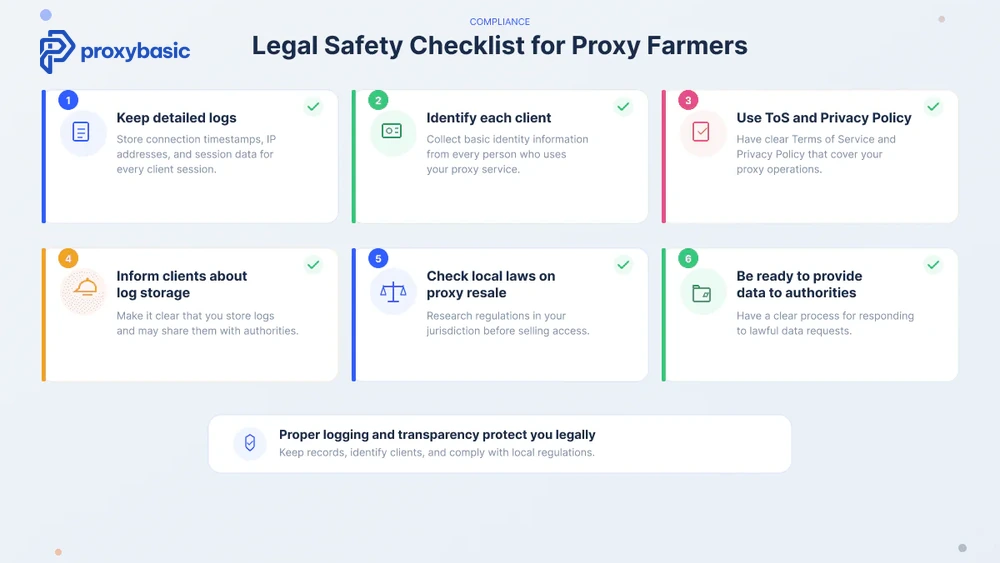
- Keep records of your use, if you’re using proxies for legitimate business purposes (market research, price monitoring), document the use case. This matters if you ever need to demonstrate authorized access.
- Use GDPR-compliant providers; if you’re in the EU or handling EU resident data, choose proxy providers with documented GDPR compliance practices.
Conclusion
By now, you may have the answer to “Is using a residential proxy legal?” Again, yes, in the US, EU, and UK. The proxy is just infrastructure, and legality depends entirely on what you do with it. Scraping publicly available data, maintaining privacy online, and running legitimate market research through residential proxies carries no meaningful legal risk in major jurisdictions.
Legal risk comes from accessing systems without authorization, processing personal data without a lawful basis, or using proxy anonymity to facilitate fraud. Stay within those boundaries, and residential proxy use is straightforward.
For proxy plans designed for legitimate business use cases, visit Proxybasic.