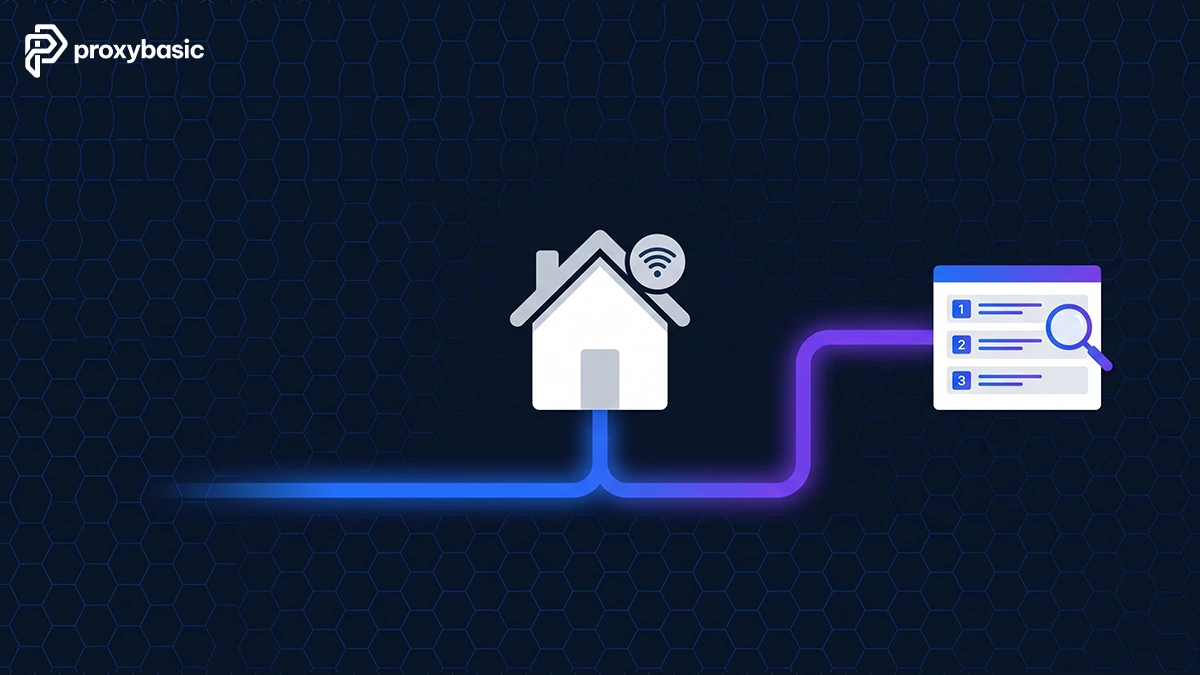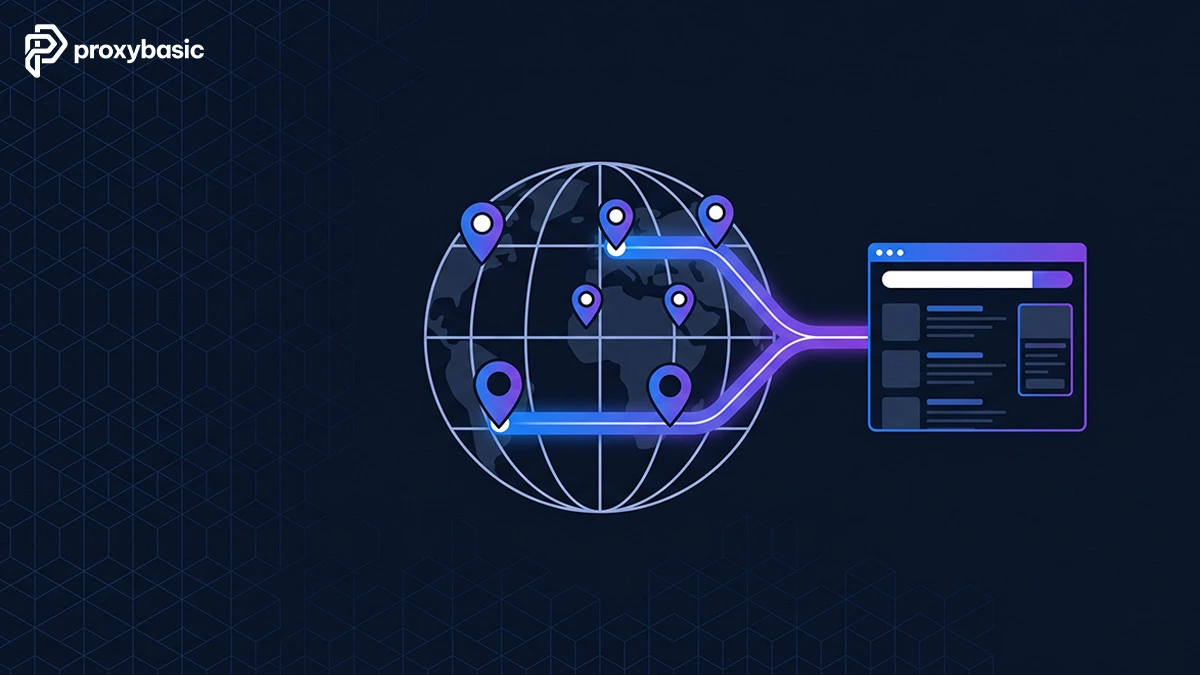
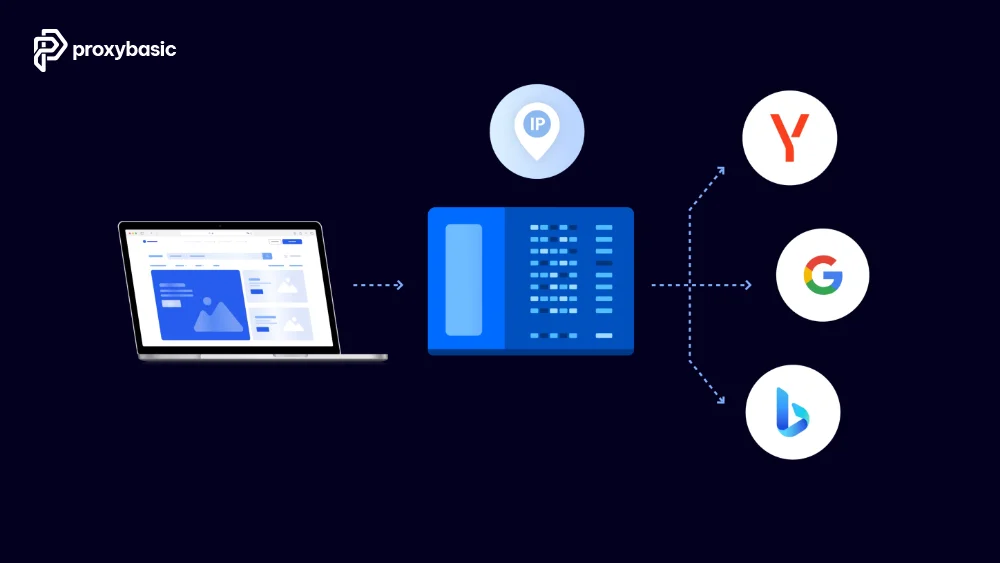
Accurate rank tracking in 2026 requires more than just a connection to Google. It requires a footprint that mirrors organic user behavior. SERP monitoring with residential proxy provides this by routing requests through genuine Peer-to-Peer (P2P) networks.
By utilizing real-user IP addresses rather than flagged datacenter ranges, SEO teams can bypass aggressive anti-bot measures and capture hyper-local data, down to the city or ZIP code level, without the risk of “ghosting” or IP-based result bias.
What Is SERP Monitoring with Residential Proxy?
The method matters because search results can change based on country, city, device, language, and search history patterns.
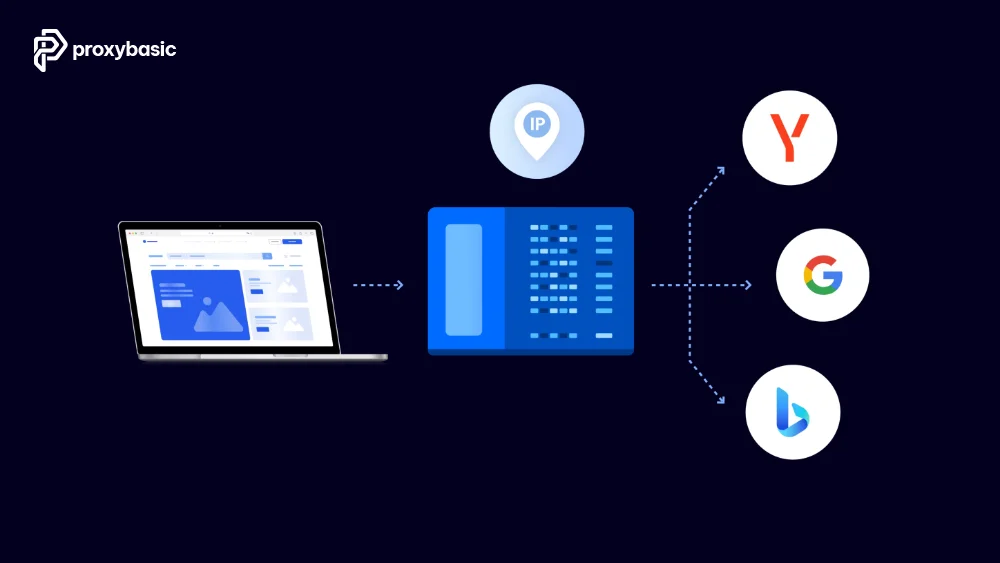
When an SEO team runs rank checks through a residential proxy, the request does not come straight from one obvious server source. Instead, it appears to come from a residential network. That makes the collected data more useful for local SEO, competitor tracking, ecommerce category monitoring, and campaign reporting across more than one market.
Overcoming the Limitations of Datacenter Proxies
While datacenter IPs offer speed, they are easily identified by search engine security layers (like Google’s Google-Bot-Verification or Cloudflare). Using a residential proxy for rank tracking eliminates the “server-side” footprint.
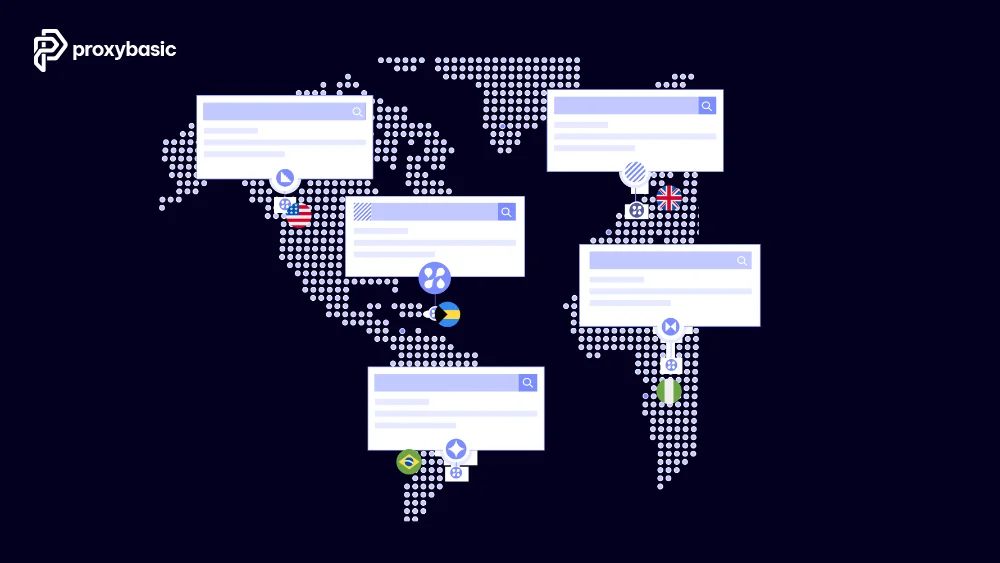
- Localized SERP Variance: Search engines serve different results based on the ISP and GPS coordinates. Residential IPs allow you to see the exact Local Pack and “People Also Ask” features visible to a user in a specific neighborhood.
- Request Pacing & Headers: Beyond the IP, high-quality SERP data collection proxies manage the TCP/IP fingerprint and TLS handshakes, making automated rank tracking indistinguishable from manual browsing.
- Scale without CAPTCHAs: Distributing 10,000+ daily keyword checks across a diverse pool of millions of IPs minimizes the request density on any single node, drastically reducing the frequency of CAPTCHA triggers.
Why Use a Proxy For Rank Tracking?
Without a proxy, a rank tracker may check every keyword from one location and one machine. That can create a narrow view of the SERP. It can also make it harder to run frequent checks across many pages or markets. A proxy setup gives the workflow more room to handle local results, scheduled refreshes, and client reporting without leaning on one direct connection.
What Problems Can a Proxy Solve?
Moving beyond a handful of keywords requires a proxy infrastructure that addresses the inherent friction between automated crawlers and search engine security. A dedicated residential proxy layer solves three critical bottlenecks:
- Hyper-Local Semantic Bias: Search engines prioritize results based on the proximity of the IP to the search intent. Without a residential proxy, your tracker is often “ghosted” into a generic national SERP. Using a localized proxy eliminates this bias, allowing you to capture the exact Local Pack and “Near Me” results visible to a user in a specific neighborhood or ZIP code.
- Request Throttling & IP Burn: High-frequency tracking from a single source triggers rate-limiting, leading to CAPTCHAs or soft 403 blocks. A residential pool distributes your keyword load across millions of unique nodes, making your automated tracking indistinguishable from organic, decentralized traffic.
- Infrastructure Scalability: For enterprise SEO, checking 10,000+ keywords daily across multiple devices (Mobile vs. Desktop) is impossible on a standard server connection. A proxy gateway provides the concurrency required to run massive, parallelized audits without a drop in success rates or data integrity.
Advanced Selection Criteria for SEO Architects
When evaluating a rank tracking tool with proxy support, technical teams must look beyond the “total IP count” and focus on:
- Concurrency Limits: Does the provider throttle your simultaneous rank checks? For large-scale SERP monitoring, unlimited concurrent sessions are a baseline requirement.
- IP Refresh Rate: Residential pools are dynamic. Ensure your provider monitors “IP Health” to prevent a high percentage of timed-out requests from dead nodes.
- API Integration: A professional setup should allow you to programmatically toggle between Residential (for local accuracy) and ISP Proxies (for stability during long-tail keyword audits).
How to Integrate Proxies into Your SEO Stack?
To move beyond, SEO architects must understand the plumbing of SERP data collection. Below is a blueprint for implementing residential proxies via a standard Python request and a configuration guide for industry-standard tools.
Programmatic Implementation (Python)
For custom-built scrapers, using a Proxy Manager approach is superior to hardcoding IPs. This snippet demonstrates how to authenticate a residential gateway and pass the necessary headers to mimic a real user.
Python
import requests
# Your residential proxy gateway (2026 standard)
proxy_host = “p.domain.com”
proxy_port = “7000”
proxy_user = “user-zone-residential-region-us-city-new_york”
proxy_pass = “your_password”
proxy_url = f”http://{proxy_user}:{proxy_pass}@{proxy_host}:{proxy_port}”
proxies = {
“http”: proxy_url,
“https”: proxy_url
}
# Emulating a real browser fingerprint is mandatory in 2026
headers = {
“User-Agent”: “Mozilla/5.0 (Windows NT 10.0; Win64; x64) AppleWebKit/537.36 (KHTML, like Gecko) Chrome/121.0.0.0 Safari/537.36”,
“Accept-Language”: “en-US,en;q=0.9”,
“Referer”: “https://www.google.com/”
}
def fetch_serp(keyword):
search_url = f”https://www.google.com/search?q={keyword.replace(‘ ‘, ‘+’)}”
try:
response = requests.get(search_url, proxies=proxies, headers=headers, timeout=15)
return response.status_code, response.text
except Exception as e:
return None, str(e)
# Example call
status, html = fetch_serp(“best residential proxy for serp monitoring”)
print(f”Status: {status}”)
Tool Integration: Configuring a Proxy in RankTracker / Screaming Frog
If you are using a GUI-based tool, the setup should prioritize Session Persistence for deep audits and High Rotation for broad keyword tracking.
- For Screaming Frog: Navigate to Configuration > Proxy. Select “Manual Proxy Configuration.” Use your residential gateway address and port.
Pro Tip: Enable “Proxy Authentication” and use a string that targets a specific ISP to avoid being flagged by Cloudflare’s 2026 security layers.
- For Custom Rank Trackers: Ensure your tool supports HTTP/2 or HTTP/3. In 2026, search engines increasingly treat HTTP/1.1 requests from residential IPs as suspicious “bot-like” behavior.
The “SEO Architect” Checklist for 2026
Before pushing your monitoring script to production, verify these three technical variables:
|
Variable |
Requirement |
Purpose |
|
TLS Fingerprint |
Must match User-Agent |
Prevents “Passive OS Fingerprinting” detection. |
|
DNS Leakage |
Proxy-side DNS resolution |
Ensures your server’s real location isn’t leaked via DNS requests. |
|
UDP Support |
Enabled |
Required for modern HTTP/3 (QUIC) connections to Google. |
Architect’s Note: When monitoring hyper-local SERPs (ZIP code level), always use a Sticky Session (minimum 5 minutes). This ensures that if the crawler needs to navigate to “Page 2” or “Images,” it maintains the same IP identity, preventing a “Location Jump” that triggers a CAPTCHA.
Key Features of a Premium SERP Data Collection Proxy
To execute flawless SERP monitoring with residential proxy pools, infrastructure teams must look past simple IP counts. The matrix below outlines the critical engineering variables that dictate data quality and success rates.
|
Feature |
Strategic Importance |
Technical Implementation |
|
City-Level Targeting |
Captures hyper-local “Near Me” rankings. |
Requires rand_port or city-country entry nodes. |
|
Sticky Sessions |
Useful for multi-page deep crawls (SERP pages 1–5). |
Set session_id to persist IP for up to 30 mins. |
|
Automatic Rotation |
Prevents rate-limiting on high-volume keywords. |
Configure the proxy gateway to rotate on every request. |
|
ISP Filtering |
Increases trust score for sensitive search engines. |
Filter for “Static Residential/ISP” nodes. |
Session Architecture: Rotating vs. Sticky Nodes
Choosing between immediate rotation and sticky persistence dictates your scraper’s success rate and footprint profile:
Per-Request Rotation: Best for massive, horizontally scaled keyword discovery across disparate regions. Every single HTTP request grabs a new peer IP, maximizing speed and minimizing the risk of cumulative rate-limiting.
Sticky Sessions (5–30 Mins): Vital for deep, multi-page SERP parsing (e.g., extracting pages 1 through 5, navigating to the “Images” tab, or scraping “People Also Ask” drill-downs). Keeping the exact same IP node prevents artificial “location jumps” that trigger Cloudflare or Google security layers mid-session.
Evaluating a Rank Tracking Tool with Proxy Support
When audit requirements outgrow custom Python scripts, commercial rank tracking tools must be audited against your proxy architecture. Ensure your vendor supports:
- Dynamic Entry-Node Appending: The UI or API must accept specific string modifications (e.g., `user-zone-custom-geo-us-ny`) to control geo-targeting on the fly.
- Mobile-Specific User-Agent & Viewport Matching: Mobile SERPs rely heavily on distinct carrier-level IP trust scores. The tool must allow explicit synchronization between your residential ISP type and simulated mobile headers.
- HTTP/3 (QUIC) Transport Protocol natively: To match modern user environments, your platform must establish connections using UDP to match legitimate browser footprints.
Architectural Trade-offs: Built-In vs. External Proxies
|
Model |
Pros |
Cons |
Ideal For |
|
Built-In Proxies |
Zero setup friction; platform handles rotation/headers |
Higher cost per keyword; abstract geo-targeting control |
Mid-market SEO teams prioritizing deployment speed |
|
External Setup |
True cost-per-GB optimization; explicit pool and sticky controls |
Requires manual infrastructure management and custom rotation logic |
Enterprise scraper builds and custom engineering stacks |
Residential vs. ISP & Datacenter Proxies for SERP Monitoring
Choosing the right IP type is a balance between realism, speed, and cost. While datacenter IPs offer high-speed indexing, they lack the “human” footprint required for accurate 2026 SERP tracking.
|
Proxy Type |
Strategic Importance |
Best Use Case |
|
Residential |
Highest trust score; replicates genuine user behavior to bypass anti-bot shields. |
Hyper-local “Near Me” tracking and city-level SERP audits. |
|
ISP (Static) |
Combines datacenter speeds with legitimate ISP-assigned IP addresses. |
Long-lived sessions and tracking sensitive targets like Amazon or LinkedIn. |
|
Datacenter |
High concurrency and lowest cost, but easily flagged by Cloudflare/Google. |
Broad-stroke keyword discovery and non-localized indexing checks. |
The Bottom Line: For precise localization, residential nodes are mandatory. They strip away the “datacenter proxy fingerprint” entirely, ensuring your automated stack witnesses the unvarnished, localized search landscape exactly as a live consumer would.
Optimizing Long-Term SERP Monitoring
Success in long-term monitoring relies on “proxy hygiene” rather than just pool size. To maintain data integrity over months of reporting, SEO architects must manage four technical variables:
- CAPTCHA Mitigation: Residential IPs reduce triggers by distributing load, but you must still pace requests. Grouping 10,000 checks into bursts rather than a steady stream can help mimic organic traffic spikes.
- Geo-Targeting Precision: National-level data is often a “hallucination” of the real SERP. Use city-level or ZIP-level targeting to capture regional shifts that national proxies miss.
- Pool Health: Large pools are useless if nodes are dead. Prioritize providers that offer “Automatic Rotation” and real-time health monitoring to prevent timed-out requests.
- Workflow Integration: Choose a setup that matches your team’s technical stack. A separate Proxy Network offers maximum control for custom scrapers, while a Rank Tracking Tool with built-in support is ideal for teams prioritizing speed and automated reporting.
Conclusion
In 2026, the quality of your SEO strategy is only as good as the data feeding it. SERP monitoring with residential proxy ensures the search landscape you see matches what your customers see.
By implementing a “Residential-First” architecture with proper TLS fingerprinting and geo-targeting, you move beyond generic data and gain a competitive edge in hyper-local markets. Before scaling, audit your current reporting schedule and map your target ZIP codes to ensure your proxy layer can handle the concurrency. For more guides and related resources, visit Proxybasic.com.