Amazon runs some of the most aggressive bot detection on the web. Whether you’re monitoring competitor pricing, managing seller accounts, or scraping product data at scale, the type of proxy you use determines whether your requests go through or get blocked in seconds. Residential proxies for Amazon are the standard choice because they carry real ISP-assigned IPs that Amazon’s systems treat as normal shoppers.
This article covers what Amazon actually checks, the right proxy type for each use case, and which providers hold up in practice.
Why Amazon Requires Residential Proxies
Amazon is one of the most protected e-commerce platforms in the world. It handles millions of users every day, so it must prevent bots, scrapers, and automated tools from abusing its system. To do this, Amazon uses multiple layers of detection, and the first layer is always the IP address.
When a request is sent to Amazon, their system checks whether the IP belongs to a real internet user or a known data center. Datacenter IPs are often associated with automation tools, so Amazon blocks them very quickly. In fact, research from Imperva (2024) shows that more than 85% of requests from datacenter IPs are blocked before they even reach product pages.
This is why residential proxies are important. Residential proxies use IP addresses assigned by real Internet Service Providers (ISPs) such as Comcast, AT&T, or Verizon. From Amazon’s point of view, each request looks like it is coming from a real person browsing from home. This allows the request to pass the first security check and access the site normally.
How Amazon Detects Bots and Scrapers
Passing the IP check is only the first step. Amazon uses several advanced methods to detect automation beyond just the IP address. Here are the main factors Amazon analyzes:
- Request frequency: If too many requests come from one IP in a short time, Amazon may block or rate-limit it.
- Browser fingerprint: Amazon checks browser details such as screen size, OS, plugins, and JavaScript behavior to detect automation tools.
- Cookies and session data: A real user keeps consistent cookies and sessions, while bots often fail to maintain them properly.
- User behavior patterns: Amazon tracks how users scroll, click, and spend time on pages. Unrealistic patterns can trigger detection.
For simple scraping tasks, the IP and request headers are the most important. However, for account-based actions like logging in or managing seller accounts, session consistency and browser fingerprinting become just as important as the IP itself.
Datacenter vs Residential Proxies on Amazon
Understanding the difference between datacenter and residential proxies is key when working with Amazon.
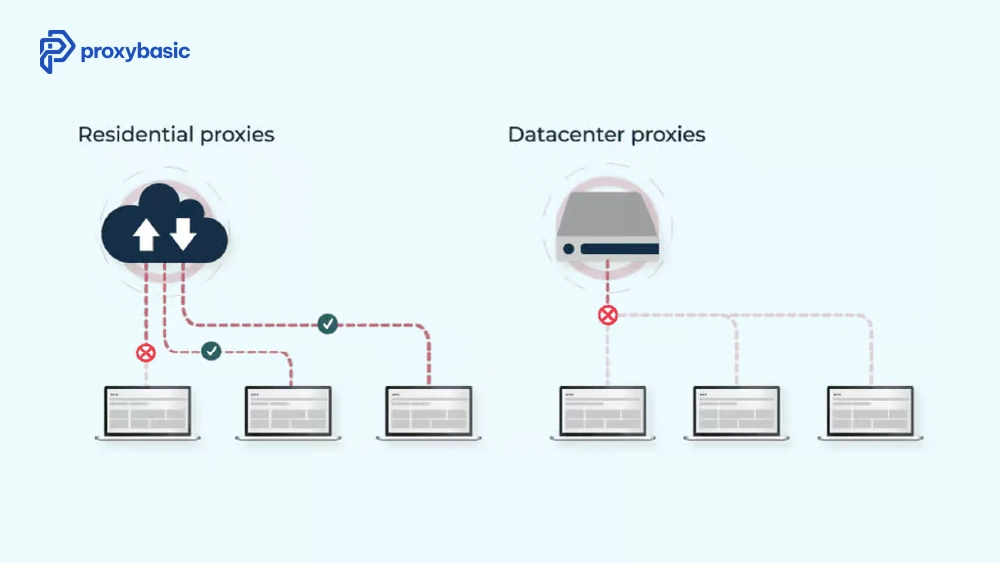
Datacenter proxies are fast and cheap, but they are easy to detect. Amazon identifies these proxies by checking the ASN (Autonomous System Number), which reveals that the IP belongs to a hosting provider. Even if you rotate datacenter IPs, Amazon can still block them because it tracks the entire network range.
Residential proxies, on the other hand, use IPs from real users. This makes them much harder to detect. Their ASN, location, and usage history all appear normal.
For Amazon specifically:
- Datacenter proxies → blocked quickly
- Residential proxies → higher success rate
- US residential IPs → best performance for Amazon.com
Because Amazon’s system is optimized for real consumer traffic, using residential proxies significantly improves access and success rates.
Use Cases for Amazon Residential Proxies
Residential proxies are widely used across different Amazon workflows. One of the most common and valuable use cases is tracking product prices and analyzing competitor activity.
Amazon Price Monitoring and Competitor Research
Price intelligence tools scrape Amazon product pages to track competitor pricing, Buy Box ownership, and promotional activity. This requires hitting the same product URLs repeatedly from different IPs, which is exactly what rotating residential proxies are built for.
For large-scale price monitoring (10,000+ ASINs), use a rotating residential proxy with a US IP pool. Set a request delay of 2-5 seconds per IP and rotate after every 20-30 requests to stay within Amazon’s rate limits.
Amazon Seller Account Management
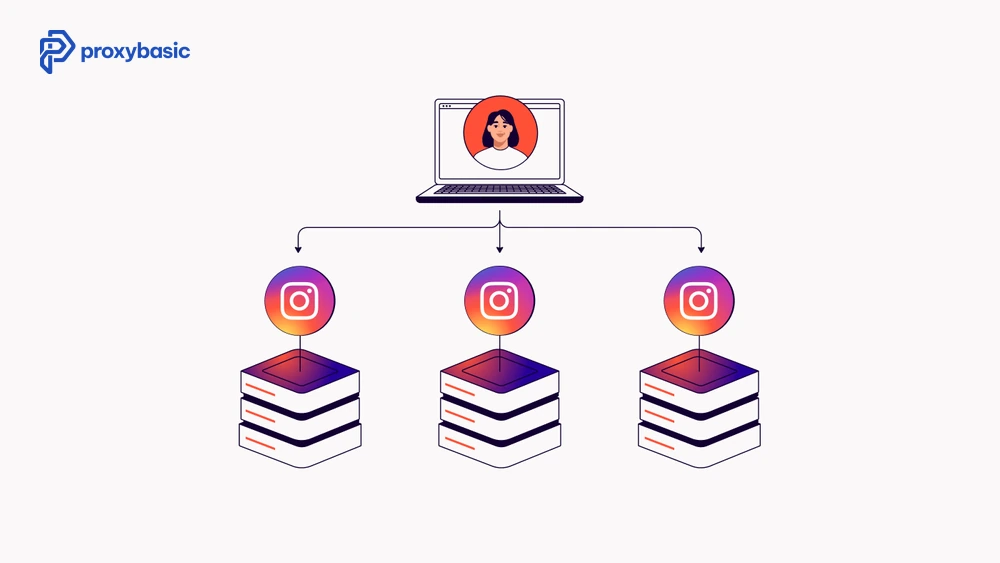
Sellers running multiple Amazon accounts need clean IP separation between accounts. Amazon links accounts through shared IPs, payment methods, and device fingerprints. Each seller account should connect through a dedicated sticky residential proxy for the Amazon session assigned to one browser profile.
Use static residential (ISP) proxies for this use case if you need the same IP long-term. A dedicated IP that only ever touches one account gives you the cleanest separation.
Scraping Amazon Product Data at Scale
Product catalog scraping (titles, descriptions, reviews, images, BSR rankings) at scale needs high-volume rotating residential proxies. The key settings:
- Rotate IP on every request or every 10-15 requests maximum
- Set user-agent headers to match real browser versions
- Include accept-language and accept-encoding headers
- Randomize request intervals between 1-8 seconds
For ASIN-level data at scale, Amazon’s Sponsored Product and search result pages are harder to scrape than standard product detail pages. Use residential proxies with sticky sessions of 5-10 minutes on search pages to maintain session cookies.
Ensuring Price Accuracy with Regional Targeting
A major challenge for Amazon sellers is the variation in pricing based on shipping location. Since Amazon displays “delivered to [Zip Code]” pricing, your residential proxy for Amazon setup must be geo-aware. If you are scraping from a generic US IP, you might miss localized discounts or regional “Out of Stock” statuses that only appear in specific states.
By configuring your residential proxy for Amazon to target specific cities or zip codes, you can achieve 100% price accuracy. This is particularly important for Buy Box monitoring, where regional shipping costs and merchant locations influence who wins the sale. Using a targeted rotating proxy ensures that your data reflects what a real shopper in New York, Los Angeles, or Chicago actually sees, providing a massive competitive advantage in market analysis.
Best Residential Proxies for Amazon (Tested)
After evaluating performance, stability, and available features, we can identify the following residential proxy for Amazon providers as the most reliable options for Amazon-related tasks:
1. Oxylabs
Oxylabs offers a dedicated Amazon scraper API alongside their residential proxy network. For pure product data collection, their Amazon SERP API handles the proxy rotation and anti-bot solving automatically. For account management and custom scraping setups, their residential pool (100M+ IPs) with US geo-targeting performs well against Amazon’s detection.
Pros:
- Large IP pool (100M+), high success rate
- Built-in Amazon scraping API (no need to manage proxies manually)
- Strong geo-targeting and enterprise-level stability
- Reliable for high-volume data collection
Cons:
- Higher pricing compared to competitors
- More complex setup for beginners
- Best features (API tools) require higher-tier plans
Good for: large-scale scraping, enterprise data collection
2. Decodo (ex Smartproxy)
Decodo’s residential proxies work reliably on Amazon product and search pages. US city-level targeting is accurate, and sticky sessions hold for up to 30 minutes. Their bandwidth pricing is competitive for volume scraping at $2.50-$3.50/GB.
Pros:
- Easy to use and beginner-friendly
- Good balance between price and performance
- Accurate geo-targeting (city-level)
- Stable sticky sessions for account use
Cons:
- Smaller IP pool compared to Oxylabs or Bright Data
- Slightly lower success rate at very large scale
- Limited advanced automation features
Good for: mid-scale price monitoring, seller account management
3. Bright Data
Bright Data offers one of the most advanced residential proxy for Amazon, with geo-targeting down to ZIP code level. This is especially useful for location-based pricing analysis on Amazon.
Pros:
- Most precise geo-targeting (ZIP-level)
- Very high IP quality and reliability
- Advanced tools and integrations
- Strong performance for complex scraping
Cons:
- Expensive compared to other providers
- Steeper learning curve for new users
- Pricing structure can be complex
Good for: regional price verification, agency-scale operations
4. IPRoyal
IPRoyal’s static residential (ISP) proxies are well-suited for Amazon seller account management. A dedicated IP that stays assigned to one account over weeks or months builds a clean IP history. Their rotating residential proxies also work for scraping at lower price points.
Pros:
- Affordable pricing for beginners and small teams
- Static residential IPs for long-term account stability
- Simple setup and easy management
- Flexible plans for different use cases
Cons:
- Smaller proxy pool than top-tier providers
- Lower performance for large-scale scraping
- Limited advanced features
Good for: account management with dedicated IPs, budget scraping setups
5. Multilogin (bundled proxy)
Multilogin is primarily an anti-detect browser but includes residential proxy access. For sellers running multiple Amazon Seller Central accounts through separate browser profiles, the bundled proxy integration simplifies the setup. Each profile gets its own IP, fingerprint, and cookies without manual proxy assignment.
Pros:
- Combines proxy + anti-detect browser in one tool
- Easy multi-account management
- Each profile has unique fingerprint and cookies
- Reduces manual proxy setup
Cons:
- Not a dedicated proxy provider
- Higher overall cost due to bundled features
- Limited flexibility if you want to use external proxy tools
Good for: multi-account sellers who need fingerprint isolation and proxy management together
How to Set Up a Residential Proxy for Amazon
Before using a residential proxy for Amazon, we need to configure them correctly based on our use case. The right setup helps improve success rates and reduces the risk of blocks or account issues.
Rotating vs Sticky Sessions for Amazon
For scraping: use rotating sessions. Every request gets a fresh IP. This maximizes the number of product pages you can hit before any IP gets rate-limited.
For account management: use sticky sessions of 10-30 minutes minimum. Amazon’s session system tracks login IP consistency. If your IP changes mid-session, you may get a security challenge or temporary lock.
For price monitoring with login: use sticky sessions tied to a logged-in Amazon account for accurate Prime pricing and regional availability data.
Geo-Targeting for Amazon Marketplaces
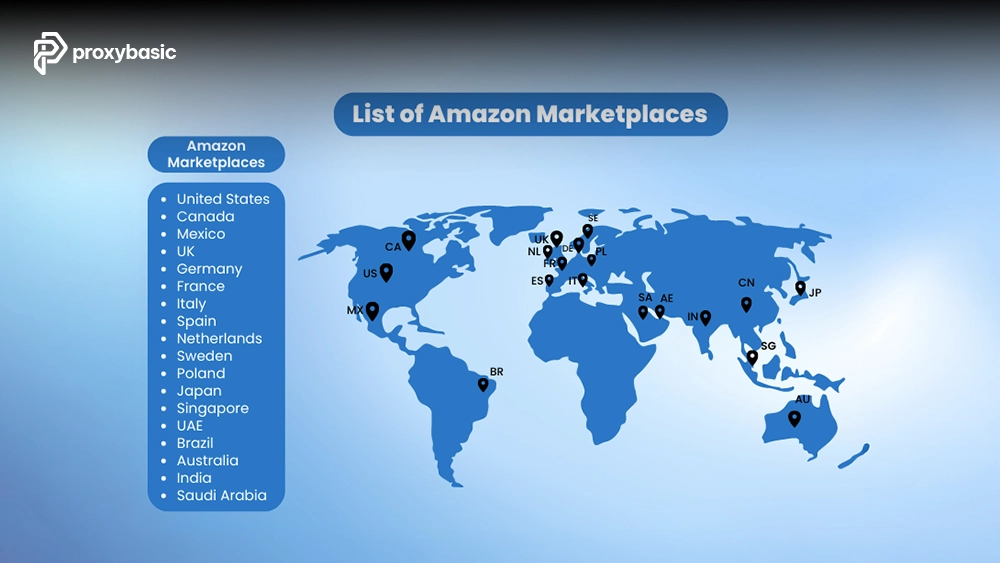
Match your proxy location to the marketplace you’re targeting:
- Amazon.com (US): US residential IPs
- Amazon.co.uk: UK residential IPs
- Amazon.de: German residential IPs
- Amazon.co.jp: Japanese residential IPs
Mismatched geo-targeting returns incorrect pricing, currency, and availability data. Most major proxy providers support country and city-level targeting via endpoint parameters.
Common Amazon Proxy Problems and Fixes
CAPTCHA on product pages: Your rotation interval is too short. Increase request delays to 3-8 seconds. If using sticky sessions for scraping, reduce session length to 5-10 minutes.
503 errors on search pages: Search pages have stricter rate limits than product detail pages. Drop your request rate and increase IP rotation frequency. Search pages should rotate on every 5-10 requests maximum.
Account security challenges after login: Your sticky session expired mid-session and the IP changed. Set sticky session duration to at least 30 minutes and log out cleanly before releasing the IP.
Blocked ASINs returning empty data: Some high-demand or protected ASINs have additional bot protection. Use a fresh proxy pool with no prior Amazon history and add full browser headers including the Referer field.
Conclusion
Residential proxies for Amazon are not a workaround; they’re the baseline requirement for any serious Amazon data operation in 2026. Datacenter proxies simply do not work on product pages or Seller Central at a meaningful scale.
For scraping, Oxylabs and Decodo give the best balance of IP quality and pricing. For account management, IPRoyal’s static residential proxies or Decodo’s sticky sessions keep accounts clean.
Match your session type to the task, set proper request headers, and budget proxy spend based on the data volume you need. Visit Proxybasic.com for current proxy pricing comparisons built for Amazon use cases.