Collecting financial data at scale , stock prices, options chains, earnings data, alternative data feeds , runs into blocking fast. Financial sites protect their data aggressively. Bloomberg, Yahoo Finance, SEC EDGAR, and trading platforms all run rate limiting and IP-based blocking that shuts down scrapers within minutes.
Proxies for financial data collection rotate your requests across different IPs so each request looks like a separate visitor. This blog covers which proxy type works for finance use cases, how to configure them correctly, and how to stay within legal and platform boundaries.
Why Financial Data Collection Needs Proxies
Financial data platforms protect their data for commercial reasons. Real-time stock feeds, options pricing, and earnings data are licensed products. Sites like Bloomberg charge thousands of dollars per month for API access , scraping the same data for free is something they actively prevent.
Even for publicly available financial data (SEC filings, historical prices on Yahoo Finance), aggressive scraping from a single IP triggers automatic blocks. Most financial data sites enforce per-IP rate limits measured in requests per minute, and a single scraper hitting those limits gets banned within the session.
Residential proxies distribute your requests across many IPs, each appearing as a separate user. A financial data site sees 500 different visitors rather than one scraper making 500 requests.
How Financial Sites Block Scrapers
Financial platforms use:
- Per-IP request rate limits (typically 10-30 requests/minute for free tiers)
- JavaScript rendering requirements that detect headless browsers
- API key rate limits that throttle or ban excessive usage
- Bot detection services (Cloudflare, Akamai, DataDome) on high-value data pages
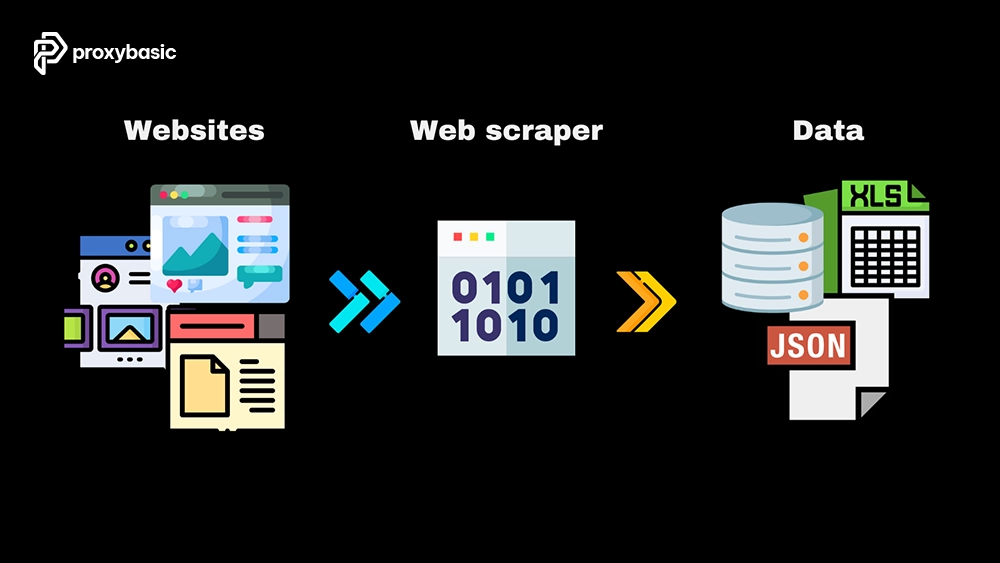
For most financial data targets, rotating residential proxies combined with proper request headers and rate limiting cover the access layer. For sites with heavy JavaScript bot detection (Bloomberg Terminal web, certain trading platforms), a headless browser with residential proxies is needed.
Residential vs Datacenter Proxies for Finance
Datacenter proxies are too easy to identify on financial sites. Sites like Yahoo Finance and SEC EDGAR specifically block known hosting company IP ranges. Residential proxies use real ISP IPs that pass IP reputation checks.
For API-level data collection (JSON endpoints), residential proxies are usually sufficient. For browser-based scraping with JavaScript rendering, pair residential proxies with Playwright or Puppeteer.
Key Use Cases
Residential proxies are used across many industries for different purposes. Let’s explore the most common use cases and how proxies help handle data collection efficiently.
Stock Market and Price Data Scraping
Collecting historical and real-time price data from Yahoo Finance, Google Finance, or financial news sites requires rotating proxies with moderate request rates. For historical data (end-of-day prices, volume), pace requests at 5-15 seconds per symbol to stay under rate limits. For real-time data, faster rotation is needed but comes with higher proxy costs.
Free financial data sources (Yahoo Finance, Alpha Vantage free tier) have strict rate limits that proxies help manage by distributing requests across IPs.
Alternative Data for Hedge Funds and VCs
Alternative data collection, job postings, satellite imagery metadata, app download rankings, product reviews, shipping data requires large-scale web scraping from dozens of different source types. Each source has different bot detection:
- Job posting sites (LinkedIn, Indeed): require residential proxies with session management
- App stores (Google Play, Apple App Store): moderate rate limits, residential proxies handle well
- Review sites (Glassdoor, Trustpilot): stricter bot detection, may need mobile proxies
For institutional alternative data pipelines, high-volume residential proxy plans with geo-targeting across multiple countries are standard infrastructure.
Crypto and DeFi Data Aggregation
On-chain data from public blockchain explorers (Etherscan, BSCScan) is publicly accessible but rate-limited. Their APIs allow 5 requests/second on free tiers. Rotating residential proxies lets you distribute API calls across multiple IPs to aggregate data faster.
For DEX pricing data and liquidity pool monitoring, direct RPC node access is more reliable than web scraping, but for aggregating data from centralized exchange websites, residential proxies apply.
Best Proxies for Financial Data Collection (Tested)
Evaluation Criteria for Providers
When evaluating any provider, consider their optimization capabilities for complex financial queries. A premium proxy for financial data collection service must offer a clean IP pool and support for advanced security protocols.
Furthermore, automated rotation features are a significant advantage, turning proxy for financial data collection tools into a robust defensive layer for developers against the most sophisticated anti-bot systems currently in use.
Best Proxies for Financial Data Collection
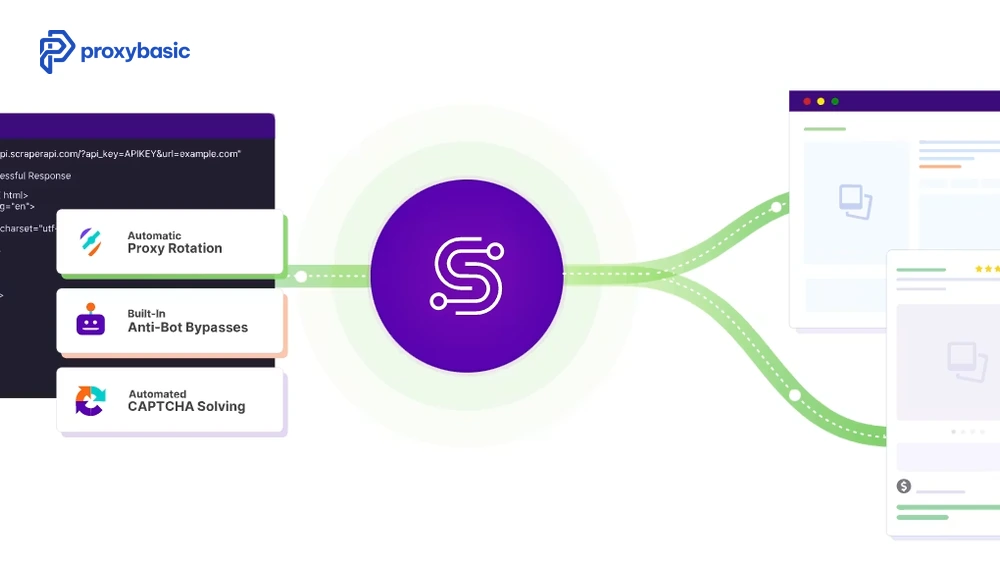
- ScraperAPI, purpose-built for web scraping with built-in proxy rotation, JavaScript rendering, and auto-retry. For financial data teams that want a managed solution rather than raw proxies, ScraperAPI handles the infrastructure layer. Their finance-specific documentation covers major data sources.
- Oxylabs, large residential pool with good coverage for US financial data sources. Their Data Collector product offers pre-built scrapers for common financial data targets. For custom scrapers, their residential rotating proxies handle Yahoo Finance and SEC EDGAR reliably.
- Bright Data, best for alternative data collection at enterprise scale. Their dataset marketplace sells pre-collected financial and alternative data, which may be faster than building scrapers. For custom collection, their residential and datacenter proxy mix handles different data sources.
- Decodo (ex Smartproxy), good cost-to-performance ratio for mid-scale financial data scraping. Their US residential IPs work well on Yahoo Finance, Nasdaq.com, and financial news sites. Pricing is reasonable for teams that don’t need enterprise scale.
- IPRoyal, a budget option for smaller financial data projects. Works on standard financial sites but may struggle with the heaviest bot protection setups.
How to Set Up Proxies for Finance Scraping
Finance scraping can be sensitive because many platforms apply strict rate limits and bot detection. A good proxy setup helps us manage request timing, bypass simple restrictions, and access data more smoothly.
Rate Limiting and Request Timing
The biggest mistake in financial data scraping is hammering endpoints too fast. Even with rotating IPs, consistent high-frequency requests from multiple IPs in the same provider’s range can trigger provider-level blocks.
Recommended request intervals:
- Yahoo Finance price history: 3-8 seconds between requests
- SEC EDGAR full-text search: 5-10 seconds, max 10 requests/second per their guidelines
- News aggregators (Reuters, Bloomberg public pages): 5-15 seconds
- API endpoints (Alpha Vantage, Polygon.io): follow documented rate limits
Add randomization to request intervals (not exactly 5 seconds every time , vary between 3-8 seconds) to avoid patterns that trigger behavioral detection.
Handling JS-Heavy Financial Dashboards
Some financial data sits behind JavaScript-rendered pages that don’t return data with simple HTTP requests. For these, use Playwright with a residential proxy:
from playwright.async_api import async_playwright
import asyncio
async def scrape_with_proxy():
async with async_playwright() as p:
browser = await p.chromium.launch()
context = await browser.new_context(
proxy={
“server”: “http://gate.provider.com:7000”,
“username”: “user-country-US”,
“password”: “yourpassword”
}
)
page = await context.new_page()
await page.goto(“https://finance.target.com/data”)
data = await page.content()
await browser.close()
return data
This approach renders JavaScript fully before extracting data, bypassing detection that checks for headless browsers without proxies.
Optimizing Operational Costs
Finally, managing the budget for a proxy for financial data collection is essential for long-term project viability. Instead of consuming bandwidth indiscriminately, you should configure filters to collect only the most critical data fields. A smart proxy for financial data collection strategy combines code optimization with the strategic use of residential IPs to achieve peak performance at the lowest possible price point.
Compliance Considerations When Scraping Financial Data
Not all financial data scraping is treated the same under the law. The level of legal risk depends on how the data is accessed, what type of data is collected, and whether proper authorization or compliance rules are followed. Key distinctions include:
- Publicly available data (SEC filings, public earnings releases, historical prices on free tiers): Generally legal to collect, but subject to the platform’s terms of service. Most platforms prohibit automated scraping, even of public data.
- Licensed data (Bloomberg terminal data, Refinitiv Eikon, paid data feeds): Scraping licensed data without authorization violates terms of service and potentially the Computer Fraud and Abuse Act (CFAA) in the US.
- Material non-public information: Scraping to gain trading advantages from non-public data carries securities law risk, independent of technical method.
For institutional use, consult legal counsel on the specific data sources and intended use before building large-scale financial data pipelines.

Conclusion
Proxies for financial data collection are standard infrastructure for any team collecting market data, alternative data, or financial intelligence at scale. Residential proxies handle most financial data sources. For JS-heavy sites, combine them with a headless browser. For managed solutions, ScraperAPI and Oxylabs offer pre-built financial data collection tools.
Set proper request intervals, match your proxy geo to your data source’s region, and stay within the legal boundaries of the data you’re collecting. Visit Proxybasic.com for proxy plans built for financial data collection workflows.